Choosing the Right Sum Insured in 2026 Using Indian Medical Inflation Data
Understand how Indian medical inflation impacts health insurance in 2026 and learn how to choose the right sum insured to stay financially protected.
Choosing the Right Sum Insured in 2026 Using Indian Medical Inflation Data
Why the Right Sum Insured Is Crucial in 2027
Picture 2026: skipping health coverage isn’t risky - just costly. As prices for care climb across India, new therapies add up fast. Picking how much protection you need now shapes your entire financial path.
Picture this: lots of people in India pick small covers - say ₹3 to 5 lakh - thinking it’ll cover their needs. Yet, just one stay in a big-city hospital could wipe that out fast. By 2026, knowing how rising medical prices eat into savings becomes key. Matching your policy’s sum insured to those growing costs isn’t optional, it’s necessary.
Choosing how much coverage fits your situation starts with looking at hospital bills today. Medical inflation pushes prices up every year, making past estimates outdated. Your daily habits shape what could go wrong down the line. Living in a busy metro often means higher treatment charges than smaller towns. Family size matters, more people mean more potential claims. Age affects premiums too, younger entries may pay less now. Pre-existing conditions need special attention when picking amounts. Unexpected accidents don’t ask questions before happening. Chronic care demands longer financial planning beyond one-time fixes. Online tools let you test different scenarios without pressure. Getting advice tailored to your history brings clarity slowly. Comparing options side by side reveals hidden gaps easily missed. Policy Era (https://policyera.com/insurance-reports/) seamlessly connects all these insurance steps behind the scenes, making the entire process effortless for you. Input changes instantly reflect in possible outcomes shown later.
Indian Medical Costs Rising in 2026
Year by year, medical prices in India climb faster than other expenses. Lately, health care spending rises about 12 to 15 percent each time around. Come 2026, what you pay for treatment feels much heavier
• Hospital room rents in metro cities
Surgical Procedures and ICU Charges Scans show what blood work cannot reveal. Some tools find issues others miss completely. Machines capture details eyes never could. Tests point where guesses fail often
• Medicines and post-hospitalization care
A few years back, a medical treatment might have taken three lakh rupees. Today, that same process could mean paying six or seven. New tools in medicine now show up in every hospital. Costs rise because of these changes. Special care used to be rare. Now it shapes what most people receive. Finding the proper sum insured in 2026 becomes less about immediate costs, more about shaping future stability. Yet it hinges on clear foresight, not guesswork.
Traditional Coverage Amounts Fall Short Now
A single hospital stay can now wipe out savings that once lasted years. Back then, three, five, or seven lakhs felt like a safety net. Today, medical costs have moved far ahead. Many families still choose those old limits without realizing the gap. Inflation in healthcare doesn’t wait for budgets to catch up.
Here’s why low coverage can fail you:
• A stay in intensive care might run from fifty thousand to a hundred thousand rupees daily • A single trip through heart bypass surgery might set you back four to eight lakh rupees • Facing cancer might mean costs climbing up to twenty five lakh rupees. Ten lakh could be just the starting point for care expenses • Spending on organ transplants might go beyond twenty to thirty lakh rupees
When coverage runs out during care, money comes from your wallet. That makes the whole idea of insurance pointless.
How Much Insurance You Might Need in 2026
Picking a coverage amount means looking at what could actually go wrong - never just making it up. What matters most comes down to these points:
1. Your City of Residence
Flying across states, medical bills shift like weather. One moment it's monsoon prices, next a drought of affordability.
Metro Cities See Highest Hospitalization Costs
• Tier-2 cities are moderately expensive • Tier-3 cities are relatively affordable
Living in a big city means aiming for at least ₹10–15 lakh coverage per individual. Still, location plays a role in setting that number higher. Because medical costs rise faster there than elsewhere. So basing your choice on where you reside makes practical sense. Yet some overlook how urban rates affect needed protection levels.
2. Your Age and Health Details
- A sum of ₹10–15 lakh works fine for younger people just beginning. That amount fits their early stage in life pretty well
- For those past forty, thinking about fifteen to twenty five lakh rupees makes sense. That range often fits needs at this stage of life
- People who already have health issues might need a greater amount
- Older years often bring more trips to the hospital. Getting stronger protection sooner means smaller payments later on.
3. Family Size and Dependency
Beside covering everyone together, a family floater plan adjusts its limit across members when needed A sum of ₹15–20 lakh works well for most couples. That amount tends to cover basic needs without stretching too thin. Some manage less, though it often brings extra pressure. Reaching that range gives a bit more breathing room when life gets unpredictable A household with two adults and two children might consider a target between twenty and thirty lakh rupees Folks with kids tend to file more claims, which pushes expenses up. Having older parents at home also plays a role in higher payouts.
4. Lifestyle Risks
If you:
• Smoke or drink • Have a sedentary lifestyle • Are overweight • Have a stressful job Your odds of health problems go up, so more protection makes sense.
5. Medical History
Family background includes:
• Heart disease • Diabetes • Cancer • Hypertension
This means raising your coverage amount before problems arise, just to stay ahead. Because waiting too long could leave you short when it matters most.
Sum Insured Guidelines for 2026
Looking ahead to 2026, this lines up with today’s health care prices and how fast they’re rising. Instead of guessing, it helps to follow where the numbers point. Since expenses keep shifting upward, planning now feels less like a choice, more like catching up. With each year, what worked before falls further behind. So adjusting course isn’t sudden - it’s overdue. One thing stands clear when you track the pattern over time
A young city dweller below thirty five might see earnings between ten and fifteen lakh rupees. This range often fits those just starting out in urban areas
A person past forty might see numbers between fifteen and twenty five lakh rupees. These figures stand alone, shaped by personal history rather than averages. One life, one range - calculated quietly over time
Two people together might spend between fifteen and twenty five lakh rupees
A typical household with two adults and two kids might spend between twenty and thirty lakh rupees. That amount covers basics over time, nothing more, nothing less
A household including older adults might need between twenty five and fifty lakh rupees When money matters, pairing a basic plan with a super top-up lifts protection while keeping costs down. What counts: more shield for less spent.
Super Top-Up Plans Gain Relevance in 2026
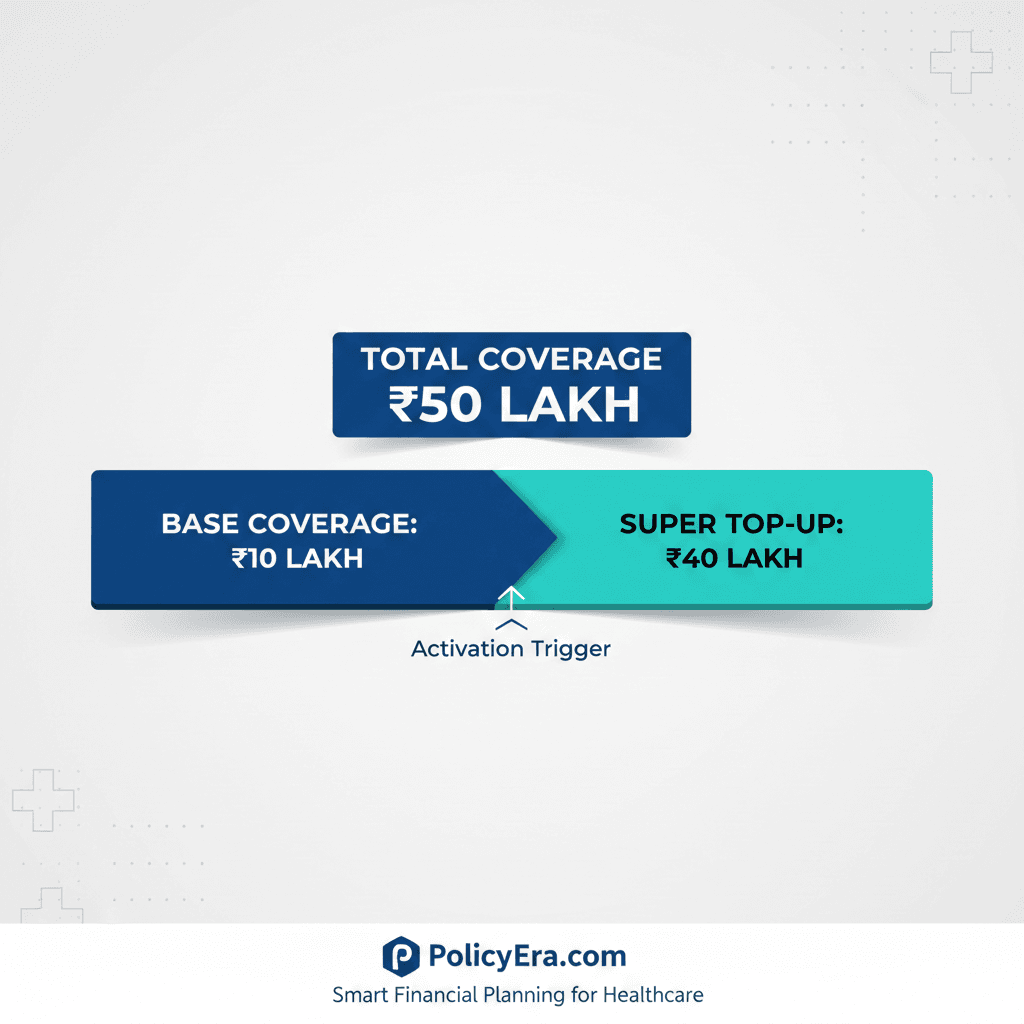
A little extra protection becomes possible through super top-up options. These choices stretch your limit without stretching your wallet.
Example:
Starting at ten lakh rupees for basic coverage Forty lakh rupees for super top-up • Total coverage: ₹50 lakh
When these pieces come together, they guard you during serious health crises while keeping costs mostly steady.
Common Errors When Picking Sum Insured
Steer clear of errors that cost too much
• Choosing low coverage to save premium
Failing to account for rising healthcare costs
• Not considering future health risks • Buying without comparing policies
Dependence sits entirely on job-based coverage
PolicyEra com helps pick right sum insured
What matters most? Matching your insurance amount to how you live, what could go wrong, and where things might head tomorrow.
This is when PolicyEra.com enters the picture.
Here at PolicyEra, our way of doing things sticks to one clear path - talk through options first. Next comes weighing them side by side. Only then does protection get put in place.
This is what guides your choice. How things unfold depends on clear steps forward. Each part connects without extra noise. Choices become easier when clutter fades away. The path clears once confusion lifts. What matters shows up naturally. Decisions gain shape through steady progress
A visit shaped by how old you are, where you live, what shape you're in, while keeping costs in mind - this one's built around those details. Your location matters just as much as your numbers. Money talks, sure, but so does how you feel day to day. This isn’t one-size-fits-all; it adjusts quietly behind the scenes
• Unbiased comparison of top health insurance plans across insurers
A fresh look at how much coverage fits your needs comes first. Pairing main plans with extra layers matters more than you think. Choices shape outcomes behind the scenes. Smart picks often hide in plain sight. Details define direction when decisions pile up When times get tough, help is there. Reach out just when things feel heavy. Support shows up right where it matters. Ask whenever life feels too loud
• Transparent advice with no hidden agenda
What if getting coverage felt just right? Not too much spending. Not too little protection. PolicyEra adjusts things so it fits your needs without waste. Right amount. Right cost. No guesswork needed.
Future Proof Health Insurance 2027
Facing high healthcare costs seems unavoidable across India right now. By 2026, having too little insurance might mean serious money troubles if illness strikes.
Choosing the right sum insured today ensures:
Money worries vanish when you’re stuck in a hospital bed. Bills stop feeling heavy the moment treatment begins. Relief shows up right where it's needed most, during recovery
Top hospitals stand ready. Care meets high standards there. Getting help means reaching skilled teams. Treatment options open widely. Quality stays a priority everywhere
A sense of calm settles in when things feel steady. Safety wraps around everyone close to you. Stability shows up quietly, without fanfare. Comfort grows where worry once lived
Think of health coverage not just as paperwork. See it instead as something that supports your money and body over years. What matters most shows up when you need care the most.
Figuring out the right amount of protection can feel unclear. At times, a fresh perspective makes it easier to decide. Coverage choices get clearer when you see options side by side. Confidence grows once you understand what fits your situation best.
About PolicyEra
Right now, protection begins with smart choices. Expert advice guides your way through health, life, or general coverage options. Unbiased insights make it easier to weigh one plan against another. Support stays with you from start to finish when claims come up. Families find clarity where confusion often lives. Every step forward happens without pushy sales talk. Trust builds slowly through honest help. Tomorrow feels less uncertain when today's decisions are clear. Consult. Compare. Cover.
FAQ
1. What is the ideal sum insured for health insurance in 2026?
The ideal sum insured in 2026 depends on your age, city, family size, and health risks. For metro city residents, experts recommend at least ₹10–15 lakh for individuals and ₹20–30 lakh for families due to rising medical inflation.
2. Why is medical inflation important while choosing health insurance?
Medical inflation in India is rising at 12–15% annually, making treatments significantly more expensive every year. Choosing a low sum insured today can leave you underinsured in future medical emergencies.
3. Is ₹5 lakh health insurance enough in 2026?
No, ₹5 lakh is generally insufficient in 2026, especially in metro cities. A single hospitalization, ICU stay, or major surgery can easily exceed this amount.
4. What is a super top-up health insurance plan?
A super top-up plan increases your total health insurance coverage at a low cost. It works after your base policy limit is exhausted and is ideal for protecting against large hospital bills.
5. How much health insurance does a family of four need in 2026?
A family of four should ideally have ₹20–30 lakh coverage in 2026, considering rising hospitalization costs, children’s healthcare needs, and medical inflation.