Term life Insurance
How to Choose the Best Life Insurance Policy for Family

A family consults with a financial advisor at home to choose the right life insurance policy for their needs.
Key Highlights
• To get the best life insurance policy for your family, match your life cover to your income, what you owe, and your long-term financial goals.
• A term insurance policy gives you a high life cover for a lower premium payment. Other plans like whole life, endowment plans, and ULIP each work for different needs with your money.
• The sum assured should be enough to take care of living costs, any loans, child education, and give your family a good financial future.
• If you buy life insurance before you turn 50, you can often get a lower premium payment.
• If you are a parent, be sure to read about any age limits, medical tests, copayment rules, and coverage limits before you buy.
• Add-ons, known as riders, can give your family more financial protection without making changes to your main insurance policy.
Overview of Life Insurance for Families in India
Life insurance policies in India help families at many points in life. Some plans are made only for pure protection. There are also plans that give life insurance cover and help you save, invest, or plan for retirement. These life insurance policies can offer support when you need it most and may also help with retirement planning.
Life insurance gives your family money if something happens to you. This payment, called the death benefit, goes to the person you choose. They can use it help pay for everyday costs, any loans left unpaid, and future needs. It is good to know why you need this coverage for your family and how it works in your whole financial planning. That way, you can pick the life insurance that is best for you. Life insurance helps give you and your loved ones financial protection.
Why Life Insurance Matters for Working Professionals
For people who work, the money you get from your job is often what holds everything together at home. The rent or EMIs, the food you eat, your child's school fees, and your savings all come from this. If that money stops without warning, your family can find it hard to keep their financial security.
That is why life cover matters. The right plan can help replace lost income. It gives your family some time to settle. They do not have to use up savings that were for other things. The policy tenure is important. If you have young kids, pay a home loan, or look after parents, your coverage should last through these important years. A good policy tenure matches the time when your family needs your help with money the most.
Protecting Spouse, Children & Aging Parents
Your family needs more than just paying the bills each month. You might want to plan for child education and higher education too. There is also caring for your parents’ health. You may want your spouse to have a good life ahead. If you don’t have a backup plan, these goals may take longer to happen or might not happen at all.
Having strong insurance coverage gives people good financial protection. It helps those who count on you. It can help your spouse with home bills. It also helps your children stay with their plans and puts less pressure on your savings.
Many people think just about themselves when they are buying something. A better way is to think about the whole family. Think about this: if you are not there, who will pay for school, everyday costs, or medical bills for your parents if they get old? Knowing the answer will help you pick the right coverage for your needs.
How the Right Policy Supports Long-Term Financial Goals
A life insurance plan is not just for a death benefit. It can also help with financial planning. Choose the life insurance plan that fits your long-term needs and the risk you feel good about.
If your top goal is to replace your income, term insurance can be enough. But if you want both protection and a way to grow your money, you can look at permanent plans. A few good ones are ULIP, whole life, or endowment plans. These may fit your financial goals, and also help with wealth creation.
Think about where you want to be in the long term. You might need to save money in a steady way. Some people want to give support for a child’s future. Others look for help with retirement planning.
The best plan for you depends on what you want. Do you need something that is easy to pay for? Or do you feel it is more important to have sure savings? Maybe you want to see your money grow with the market.
It gets easier to choose once you know the main policy types.
Understanding Life Insurance Types in India
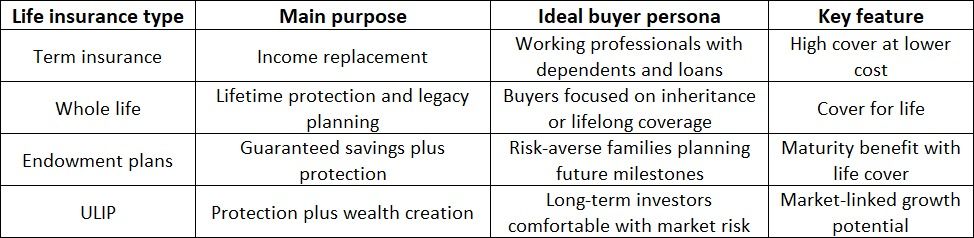
India has many types of life insurance, but most families start with just four main kinds. These are term insurance, whole life insurance, endowment plans, and ULIP. Each insurance plan has its own use.
Some products give you affordable protection, and some mix life cover with savings or investment value. An insurance company can also offer different options like return of premium, child plans, retirement plans, and group cover. To make a good choice, it helps to know how each plan works and when you might need it at your life stage.
What is Term Life Insurance?
Term life insurance is made for protection only. It gives you cover for a set time that you pick. You pay each year and, if something happens to you in that time, your family will get help. A term life policy is simple and easy to get. Many people use life insurance like this to keep their loved ones safe if they are not around. If you want a plan just for a few years, term life insurance can be a good choice.
Most plans last for 10, 20, or even 30 years. If the person who is covered by the life insurance dies during this time, the people they picked get a death benefit. This type of life insurance is usually more affordable. It does not have any part where you are saving money or making investments. That is why many families like it. They can get enough coverage and do not have to pay high costs.
Key Advantages of Term Insurance
Term insurance is simple and easy to understand. It is also cheaper than many other options. Families can get more coverage for less money with term life insurance. This gives them room to use their money for other important things in life.
You can choose a time of 10, 20, or 30 years. If you die in this time, your nominee will get the death benefit.
Because it is made just for protection, term life insurance costs less than most of the other life insurance types. That is why it is a good choice if you want term life that gives a lot of cover but do not want to spend much money.
The main cost you have in a term insurance plan is the premium payment. In most term plans, you do not get any money back if you live through the term. A few types do give a return of premium, but for most people, a regular term plan is a good and simple choice. It gives maximum family protection and keeps the cost low.
What is Whole Life Insurance?
Whole life insurance gives you insurance coverage for all of your life if you keep paying the premiums. A term plan is different. A term plan only lasts for a certain number of years. A whole life insurance plan does not stop after some time. As long as you pay, the coverage will keep going.
This type of policy can build some cash value as years go by. So, it is not just for basic protection. It is more like planning for the long run or thinking about what you leave for others.
When the person who owns the life insurance dies, the nominee gets a lump sum. Whole life insurance gives you cover for your whole life. It also helps you build value as you pay into it. Because of that, the cost for whole life is usually higher than just getting term cover. This kind of policy can be good for people who want to have cover that lasts, not just cover in their work years.
What is Endowment Life Insurance?
Endowment plans are a way to get life insurance and save your money at the same time. You keep paying money for the policy term. If you die during the policy term, your family can get a benefit. If you are still alive when the time is up, you can get the money that was saved.
This setup is good for people who want to feel safe and want to save in a steady way. A lot of people get it when they have future goals, like paying for school or saving for other things they plan to do.
At the end, you will get a lump sum amount if you meet all the conditions and keep the policy active. If death takes place while the policy is active, then the person you have chosen will get the lump sum benefit. Endowment plans cost more than term insurance. This is because endowment plans give you both protection and help you save money at the same time.
What is a Unit Linked Insurance Plan (ULIP)?
A ULIP is an insurance plan that gives you life cover and also helps you invest money in the market. The money you pay each time is split in two parts. One part is used for your life cover. The other part is put into investment funds, like equity, debt, or a mix of both.
This is what makes a ULIP stand out from other plans. The money you get from it depends on how well the fund does. So, there is some risk with the investment, but it also gives you a chance for wealth creation as time goes by.
A ULIP can be a good choice if you feel okay with staying invested for a long time and if you want to move your money between different funds. It helps when you do not just need protection, but you also want to grow your money over many years. It makes it easy to keep everything, like building value and getting insurance, in one plan.
Comparing Life Insurance Types: Which Fits Your Needs?
Different kinds of life insurance are good for different people. If you want a high sum assured and need to keep the cost down, term insurance is often a good pick. If you need cover for your whole life, or if you want to save money or grow it with the market, you may choose an endowment plan, whole life, or a ULIP insurance policy. The best life insurance for you will depend on your budget, how long you need it, and what you want from your insurance provider.
Key Factors to Consider When Choosing a Life Insurance Policy
Choosing a plan is not just about the price. You also need to look at the sum assured and the policy tenure. Make sure this plan fits your family’s money needs and what they have to take care of.
It also helps to look at the claim settlement ratio, how you can make premium payment, and what people say about the insurance company. A plan with a low price is not always better if the coverage is too small or the terms do not suit your current life stage. The next points can help you make a more practical choice when picking the best insurance company.
Determining the Ideal Sum Assured for Your Family
The sum assured is the money that your family will get if a claim is made during the policy term. This amount should be big enough to replace your income. It should also help cover real financial needs, not just pay for some quick bills.
A good way to plan is to think about household costs, any money you owe, and big plans for the future. You should look at things like your child's education, what your spouse will need to live on, and help that your parents may need.
Many people check options such as 50 lakh term insurance, 1 crore term insurance, 2 crore term insurance, or even more based on their income and what they need to take care of. The right coverage amount for term insurance is the one that helps your family feel safe and secure. It should let them carry on with life without having to give up too much after you are gone.
Assessing Your Liabilities and Future Expenses
Your policy needs to cover the costs you have now and what you might have in the future. Home loans, personal loans, and other credit needs can turn into a heavy load for your family. This can happen if these bills are not paid.
Then there are goals that can take years to reach. Some of these can be saving for higher education for your kids. Others might be planning for marriage, helping your spouse during retirement, or saving money to support your parents.
When you plan like this, your coverage is easier to understand. You do not pick a number at random. You link your decision about insurance to real financial goals. This way, your policy will be more helpful. It is made to fit what your family would really need as time goes on.
Evaluating Policy Tenure Based on Life Stage
The policy tenure needs to match the years when people who depend on you need your earnings. If you are in your 30s and have young children, you may want insurance cover for a longer period of time. A person who is close to retirement may not need the policy to last as long.
The years of age you are can change what you need. When you are younger or just starting your job, you may need this because you have to pay back loans or help your kids while they are in school. People who are in the middle of their careers might still need some cover until they stop working.
Pick a time period that fits when you have the biggest things to take care of. A short one may stop working before you need it. A long one may go on when you don't need it. The main thing is to match the policy to the years when your family would need money the most if you are not there.
Checking Insurer’s Claim Settlement Ratio
Price and features are good to look at when you choose an insurance company. But you should also think about the claim settlement ratio. This number shows how often the company has paid out claims. It helps you know if you can trust them with your claim settlement.
This does not take the place of reading the policy. But it helps when you look at one insurance provider and compare it with another. A good record can show better trust and the way they work.
You should not focus on just one number. You need to read all the policy conditions and watch for any rules about telling them things. Try to look at how good the service is as a whole. A good policy is more than quick to buy. It should be with a provider that has a good and steady claims process, clear talk with you, and strong service.
Understanding Premium Payment Options
You can make the premium payment every month, every three months, every six months, once a year, or sometimes as a one-time payment. This will depend on the product. You should pick the way to pay that fits your cash flow and the way you get your income.
For people who earn a salary, making regular payments can feel simple to handle. Some buyers like single or limited pay plans because they want to finish payments sooner in life.
You may also find return of premium options in an insurance policy. With these, you get your money back if you live through the whole policy term. These usually cost more than the basic plans. When you look at different plans, make sure the insurance policy gives you the coverage you need. How you pay is important, but the quality of coverage is more important.
Special Considerations for Under 50 Life Insurance Buyers
People who buy life insurance before age 50 have an edge. At this stage, the risk factors are lower. This can make it easier for them to get life insurance. The cost may be lower, too. There are also more options to pick from before more risk factors show up.
This does not take away the need for health insurance or smart planning. But it can help you choose the right time to decide. If you want to build a family, pay off loans, or plan for your children’s big moments, making a move early can make premium payment easier later on.
Advantages of Buying Life Insurance Early
Buying a term plan early means you do it at a younger age. This can help you get it at a lower cost. For a lot of people, this is the main reason to buy a term plan early.
Buying early also gives you more options. You can pick coverage that lasts longer, offers more protection, or has riders that fit you well. At this time, your profile can still be easy for insurance companies to look at and make a decision.
Term life helps you get insurance coverage early on. It lets you be ready before your big responsibilities come in. You do not have to wait until you get married, have kids, or take out a large loan to start looking after your household.
Age-Based Premium Differences Explained
Age can change the price you pay for life insurance. Insurers look at your years of age to decide how much risk you bring. This means that buying a life insurance plan when you are 30 will cost less than buying the same insurance plan when you are 45.
That difference can last for the whole time you pay. Even if you have the same coverage, joining later can mean you get a higher premium payment.
This is why waiting can end up costing you more than you might think. If you know that you need long-term cover for your family, putting off this choice can make it harder to pay for later. When you decide to act sooner, you can get the same coverage for a lower cost over time.
Locking in Lower Premiums Before Health Risks Rise
Health plays a big part in the price. As years go by, there can be a higher chance of health problems. This can change if you get accepted or how much it will cost you.
If you buy sooner, you may get a lower premium payment before any changes take place. This is a big reason why people under 50 should not wait too long to make a choice.
The main benefit is simple. You get life insurance coverage when it may be easier for you to qualify and pay for it. This makes it possible for you to have more money left for things like child plans, health protection, or saving for retirement.
Life Insurance for Parents: What You Should Know
Buying life insurance for parents is not the same as getting it for yourself. There are things you have to think about, like the age of your parents, their medical history, and any product rules. These are more important when your parents are older.
You should also look at how the life insurance policy works with your health insurance. Make sure to check things like copayments or any parts that are not covered. Before you pick a plan, see if you fit the age group, know the medical needs, and find out if the coverage is right for what you want. This will help you get the best protection from your life insurance and health insurance.
Age Limits and Senior Citizen Plans
For parents, age limits change what you can get more than anything. A lot of things have rules about who can join. Senior citizen plans may not give as many choices as the ones for younger adults.
An insurance company will let you join their plan only if you are below a certain number of years of age. This is often around 65 to 70. The age may change with each plan. If you wait too long, you may not have as many choices.
Key points to check:
• Find out the entry age limits for the plan and see if there are any plans for senior citizens.
• Check if coverage goes down or changes when you get to more years of age.
• See if the plan asks for a medical checkup before they say yes.
Medical Tests and Pre-Existing Disease Riders
Medical tests are often needed when you want to buy a plan for older parents. The people who give these plans use the tests to check health. They look for risk factors that may change if your parent gets approved or how much they have to pay.
This is important if you or someone in your family has a known illness history. Some people also want to get extra cover for illnesses they already have. These are the pre-existing disease riders or add-ons. You can add them to your plan if they are available under bigger protection plans.
Be sure to give true and full details in every health declaration. This is needed when you look at life cover or any kind of health insurance. If you leave out facts, there can be problems later. Clear and honest information helps you know the real terms of the policy. This also helps cut down issues if you need to make a claim.
Copayment Clauses and Coverage Limitations
When thinking about coverage for parents, it is good to read the details. Pay attention to copayment parts and limits. These things can change how much you will have to pay or what the company handles. This helps you know what is covered and what is not.
Even if the insurance plan seems good at first, it can have a low coverage amount or tough sub-limits. These things can lower what you really get from it. This is important to know, especially when you get older and have more health needs.
So, do not look at the plan just for the price you pay every month. You need to see how the insurance coverage works when you use it. Find out what rules and limits there are. Make sure the plan fits your parent's age and how healthy they are. A good plan means you know the limits before you buy it.
Best Life Insurance Policy for Parents in India
The best life insurance policy for parents in India is not always the one that has many features. It is the one that fits their age, health, how much they can pay, and why they want to buy insurance. A good insurance policy should meet all these needs for you and your family.
Start with what matters most. First, check if the life insurance company has the right entry age. See if the premiums will be easy for you to pay. Also, look at their medical requirements and make sure they are clear. After that, check the sum assured the plan gives you, and see what the policy tenure is. This will help you know if the plan from the life insurance company is good for you.
For older parents, the coverage can be less than what younger people get. So, it's good to find one that fits your needs instead of going after large numbers. A simple and real plan from the right provider will often be better than going with something that does not match your age or how insurance works.
Essential Riders for the Best Family Life Insurance Policy
A base policy gives you main protection. But you can add riders to your insurance plan to help with real life risks. These extra parts are not new policies. They make the cover you have much stronger.
For a lot of families, the best way to set up life insurance is to pick a few key add-ons that make sense. You should choose these with a clear reason, not just to have more. The mix you choose will depend on how you earn money, your health, and what your family needs from you. Here are the most common add-ons for life insurance that people need to know about before they decide what to get.
Critical Illness Rider: Added Protection
A critical illness rider can help you if you get a covered illness that is listed in the plan. This can be good for you when you have to handle big treatment bills or when you lose pay and it hurts your home budget.
Unlike most medical insurance policies that pay back your costs, this rider gives you a lump sum if you meet the claim conditions in the insurance policy. This means you get to use the money in any way you want.
It can help with:
• There may be treatment costs that are not paid for by other sources.
• You might have less money coming in while you get better.
• It is still important to handle everyday home bills during these hard times.
Accidental Death Benefit Rider
An accidental death benefit rider gives an extra payment if death is because of an accident. This will be as stated in the policy terms. The extra money can give your family more help if something sudden and bad happens. This will add to their support during this tough time.
If you are someone who works and travels a lot, this rider can make your insurance plan stronger. It does this without changing how your main policy works.
It should not take the place of good base life cover. Instead, see it as an extra way to get more financial protection. The rider is best if your main coverage is already strong, and you want more help in case of loss from an accident.
Waiver of Premium Rider
A waiver of premium rider helps keep your policy active if some events make it hard for you to earn or pay your premium payment. This means your policy can stay in place, even when you do not pay future premiums, if those events happen and they are covered under the rider.
This extra help is important because money problems can come up when it is tough to pay your bills. If you do not have support, you might lose your policy. This can leave your family without what they need.
Adding a waiver of premium to your life insurance policy helps keep your coverage going. You are not just getting a benefit. You are also making sure the insurance policy stays active. This way, your family will not lose life insurance when they may need it the most.
Hospital Cash and Income Benefit Riders
Hospital cash and income benefit riders can help take away some of the stress when you have to stay in the hospital or if your pay stops for a short time. They are not meant to be full health insurance plan. But the good thing is, they can work along with your health insurance.
A hospital cash rider can give you a set daily amount when you are in the hospital. An income benefit rider can help you get some money for a short time if you meet what the plan needs. This help all depends on what your plan says.
These add-ons help when your family budget is tight. A small problem with money each month can change your plans. If you want to choose riders, be sure to see how they really help your money at home. Don't just listen to what the ads say.
A Beginner’s Guide: How to Choose the Best Life Insurance Policy for Family
If this is your first time buying, the process may feel confusing. The good thing is that picking the right life insurance policy can be simple. You just need to break it down into a few easy steps.
The best life insurance policy for your family is the one that protects your income. It should also support your child’s future and help your financial stability. You do not want the premiums to be too hard to pay.
Use the steps below to go from confusion to a short list that helps you feel good about your choice.
What You Need to Get Started (Documents, ID, Income Proof)
Before you start, have your paperwork with you. This will save time. It makes it easier for you to look at plans without waiting. This is important when you fill out your application.
Most insurers will ask you for some basic papers. They need these to check who you are, how old you are, and how much money you make. The details you give also help them see if you are the right fit. They use this to decide the policy term and what steps to take for making the policy.
Usually, you should prepare:
• You need to have identity and age proof, like a government ID.
• You have to give address documents if the insurer asks for them.
• You should show income proof to back up the coverage you want.
Step-by-Step Guide to Buying Life Insurance for Family
Buying life insurance can feel easy if you follow a step-by-step way instead of asking for prices right away. First, look at what you need. Then, check different products. After that, think about the company giving you the life insurance.
The process will help you pick the right policy tenure. It also helps you find a good level of coverage for you. With this, you can choose an insurance company that meets your needs for claims and service.
A simple path looks like this:
• Look at your money needs and think about your future goals.
• Check the types of policies, what they offer, and how much they cost in total.
• Choose a few providers, read their terms, finish the health checks, and then buy.
Step 1: Assess Family’s Financial Needs and Coverage Goals
Start by looking at your family's financial needs. Think about your living costs now. You should also include any money you owe and any big things you need to pay for soon, like school fees, a house, or help for your parents.
Then think about what type of safety net you want to leave for your loved ones. Do you want the money to only pay off the loans, or do you want it to also give income for a few years? Your answer will change the coverage amount by a lot.
Try to see things the way your family would if you were not around tomorrow. Think about what they would need to have enough money to get by. This is what matters more than any fancy product booklet.
Step 2: Compare Life Insurance Types and Features
Once you know what you need, look at the different types of life insurance. A term plan is good if you want simple and low-cost cover. Endowment plans help you save money for the future. A ULIP lets you mix insurance with an investment plan. A whole life plan will give you cover for your whole life.
Do not look at just the premium when you compare the plans. Look at things like the maturity benefit, how much flexibility you will get, the risk linked to the funds, and if the plan will help you reach your goal.
Now, at this stage, you need to look at each insurance provider with care. It is not only about the product design. Service quality and how clear they are matter as well. A better, simple comparison will help you make a shorter and stronger shortlist.
Step 3: Calculate the Appropriate Sum Assured (10x-15x Rule)
A good way to pick your sum assured is to aim for an amount that is 10 to 15 times what you earn in a year. You should then add any money you owe. This can help you decide the sum assured you need for your family’s financial security.
In practical financial planning, the coverage amount you choose should match what you really need to pay. You have to think about things like a home loan, school costs, and if you need to help your parents with their bills. If you have these needs, the coverage amount may need to go up.
The 10x-15x rule is not a final answer, but it helps point you in the right direction. It works well when you also think about your debt, future education costs, and how many people depend on your earnings. This makes the estimate better and more real.
Step 4: Research and Shortlist Top Insurers
Now, you should not just look at the plan, but also compare the insurance company. Check if the insurance company has a good name and if it will still be there in the future. See if the insurance company explains what it offers and how things work in a way that is easy to get.
Customer service is important because getting a policy is just the start. As time goes on, you may need help to update things, get documents, fix issues with payments, or get support for claims your nominee may have.
Also, look at the claim settlement ratio as one thing to check. You should think about this with service quality, how clear the product is, and how easy it is to talk with them. A good list will keep all three of these—the claim settlement, service, and clear talk—in mind, not just focus on one small thing.
Step 5: Understand Policy Terms, Riders, and Exclusions
Before you pay, make sure you read the terms of the policy well. This will help you know how the insurance plan works in real life, not just in perfect cases.
Look at the riders you can get, see what makes their benefits start, and think if they help your family or not. At the same time, be sure to read about what things are not covered and what you need to tell or share before you can get these benefits.
Many people say problems start with making guesses. If you read your plan carefully, you can stay away from things that come up with waiting times, things not said, or extra rules. It is always good to have a plan you understand well, rather than a plan that has many things but you do not know the details.
Step 6: Complete Application and Medical Tests
Once you finish making your list, fill out the application. Make sure you put in correct details. You will need to give your personal, financial, and health information. Be sure to add this information in an honest and careful way.
Some plans need medical tests. These tests help the insurer look at your risk. They also use them to check the terms for your insurance coverage.
Do not take this step lightly. Even small things you leave out can change future claims. Being honest helps the whole process go more smoothly and lowers the chance of problems in the future. It also makes sure you get a policy that matches your health and the way you live.
Step 7: Review, Choose, and Purchase the Best Policy
Before you buy, take a moment to look things over one more time. Check the coverage you get, how much you have to pay each month, and see if there are any riders added. Look for what is not covered by the policy. Make sure the policy term fits the time when you will need it the most.
Then pick the life insurance option that works best for you right now. This does not always mean you should go for the cheapest or most complicated one.
An insurance policy should be easy for you to keep for years. You should not feel any stress while doing this. When you feel sure about it, you can buy it. Keep the papers in a safe place. Make sure your nominee knows about the insurance policy too. It works well only if your loved ones know about it and understand what it is for.
Tax Benefits of Life Insurance Policies in India
Life insurance policies in India offer tax benefits. But you should not buy these plans only to save on tax. The main reason to get life insurance should be to protect yourself and your family.
Still, knowing how the income tax rules work can help you plan in a better way. The type of insurance plan you pick and the conditions you meet will decide if your premium payments and payouts get a tax deduction or if they will be tax free under tax laws and the income tax act. Before you count on any tax benefit, read the latest tax act rules and income tax updates well.
Section 80C Deductions on Premiums Paid
Premiums you pay for eligible life insurance policies can help you get a tax deduction under Section 80C. There are some rules and limits, but if your life insurance fits those rules, this tax deduction can lower the income you are taxed on. This is one way that life insurance can help you save money at tax time.
You should start by thinking about why you need protection and what you can afford before you decide on your premium payment. Tax benefits are good to have, but they are not as important as what the policy is really for.
Tax rules can change over time, so you should be careful when you do tax planning. You need to check if your insurance policy fits all the conditions set by the law. Keep in mind that tax treatment depends on what the current law says. If you feel unsure, ask a qualified advisor before you decide what to do about deductions.
Section 10(10D) – Tax-Free Maturity and Death Benefits
Tax-free maturity and death benefits are important things to look for when you pick a life insurance plan. The Income Tax Act has a section called 10(10d) that says the lump sum money from life insurance policies does not have income tax. This helps give you peace of mind and more financial security. When you or your family gets the payout, there are no tax deductions, so they get all the money. This support can be a big help when times are hard. It is a good idea to choose an insurance policy that helps you get the most tax benefits, as this will help you with your financial planning in the long run. Term life and whole life insurance options both offer benefits and keep your family’s financial future safe when it matters the most.
Affordability and Cost Comparison of Life Insurance Options
Affordability plays a big part in picking the best life insurance policy for a family. It can have a big effect on your money and your peace of mind. To make a good choice, you need to check out the cost of different options. Start by looking at premium rates for different types of policies. These include term insurance, whole life, endowment plans, and ULIPs. Term insurance usually costs less and gives a lot of coverage. This makes it a good choice for families who want to put protection first, before thinking about growing savings.
If you want both protection and a way to invest your money, you should know that whole life and ULIP plans will be more expensive. They will come with higher premiums. When you are thinking about cost, look at how much you will pay over the whole time of the insurance policy. Do not just focus on the first payment. Think about how rising age or changes in your health could make the price go up over time.
It helps to use online tools or talk to an advisor. This way, you can figure out what the costs might be and find out which policy is going to be the best financial fit for your family. Always keep in mind that it is important for an insurance policy to be affordable, but it must also give enough coverage. You do not want your family to lose their financial stability or peace of mind, so pick a life insurance policy that gives them what they will need for their future.
Challenges People Over 50 Face When Buying Life Insurance
When people over 50 start to look at life insurance, they can face some real challenges. A big one is that health problems tend to be more common at this age. Because of this, some may have to pay more for their plan, or it might be tough for them to get covered if their medical past is not good. Health issues like diabetes, high blood pressure, or heart troubles could mean lots of doctor visits and tests, making it hard for them. Many companies also set harder rules for people who are older. This means there are fewer plans, shorter coverage times, or higher costs for them.
Trying to pick between the different kinds of policies, such as term or whole life insurance, can get tricky. At this stage, most people want life insurance for protection A lot more than as a long-term way to save money. There are also deeper feelings involved. A person may feel stressed or worried because of thoughts about the future, like wanting to leave something behind for family and friends. Knowing about these key struggles can help someone find the life insurance, whole life insurance, or other coverage that fits their needs best.
How does term life insurance work for protecting my family?
Term life insurance gives your family money to help them if you are not there one day. It is a type of life insurance that many people use for financial protection. This insurance lasts for a set amount of time. If something happens to you during this term, your loved ones get a payout. A term life plan can give peace of mind because you know your family will get help when they need it most. Life insurance like this can be a good way to protect the people you care about.
1. Coverage Period: You choose how long you want the life insurance to last, from 10 to 30 years. The policy stays in place for this time. If you die during this time, the death benefit gets paid to your loved ones.
2. Premium Payments: You pay money, called premiums, every month or year while the life insurance is active. These payments are most times lower than what you pay for whole life insurance because the coverage is only for a set time.
3. Death Benefit: If you die while the policy is active, the people you choose get a tax-free death benefit. This money can help them pay for things they need. It can be used for living costs, debts, education costs, or other financial needs.
4. No Cash Value: A term policy does not build up cash value like whole life insurance does. It is only for the death benefit.
5. Renewal and Conversion Options: When the term ends, you might be able to continue the policy or change it to a whole life insurance policy. But, you might have to pay higher premiums. To sum up, term life insurance is a good and low-cost choice. It helps to keep the people you care about safe with money when they need it most. This is often the time when they count on your income. Life insurance like this can give your family peace of mind.
Conclusion
To sum up, picking the right life insurance for your family is important. You need to think about a few things before making a choice. It's good to know about the types of life insurance you can get. You also want to look at what your family needs and what their life is like now. This will help you pick an insurance policy that gives your family the best protection.
Make sure you check how much coverage you get. Look at how long the policy lasts and if there are extra options that can give your family more financial security. Doing these things means you will keep your loved ones safe. Their financial future will be better and more secure.
If you feel ready to protect your family's financial future, you can contact us for a free talk about your options. This way, you can find out what can work best for you and your family when it comes to life insurance.
FAQs
1. What is the best life insurance policy for family in India?
The best life insurance policy for a family in India is the one that fits your income, your loans, and your dependents. Many working people like to choose a term plan from a good life insurance company. The reason is that this type of insurance policy gives a high life cover and enough sum assured. It also gives useful insurance coverage and does not cost too much.
2. How do I calculate the right sum assured for my family?
Start with a sum assured that is 10 to 15 times your yearly income. You should also add any loans you have and think about big financial goals, like paying for education. A term insurance calculator can help you find the coverage amount you need, but the last number should match real household costs and your needs for long-term financial protection.
3. Which life insurance types are best for parents over 50?
For parents who are over 50, the right life insurance depends on their years of age, health profile, and what entry limits each plan has. Check each insurance policy for medical rules. It is good to plan for health insurance as well. Before you pick a provider, compare the claim settlement ratio. This will help you choose the best life insurance for your needs.
4. Can I add riders after purchasing my life insurance policy?
Riders are extra options you can add to an insurance policy. You may or may not be able to add these later. It depends on the terms of the insurance policy. Some plans let you make changes at certain times. Others do not allow this. You should always check if riders are available. Look at the rules for the policy term and policy tenure before you think about getting more insurance cover later.
5. How Much Life Insurance Does My Family Actually Need?
The right life insurance coverage depends on your income, loans, family expenses, children’s education, and future financial goals. A common starting point is 10 to 15 times your annual income, plus outstanding debts and major future expenses. The final coverage amount should match your family’s actual financial needs and the number of people who depend on your income.
6. Term vs Whole Life Insurance: Which Should I Choose?
Term insurance provides life cover for a fixed period and generally offers higher coverage at a lower premium. Whole life insurance provides coverage for your entire life as long as premiums are paid and may also build cash value. Your choice should depend on your family’s protection needs, budget, financial goals, and desired policy duration.
7. What's the Best Life Insurance for Young Families?
For young families, the right life insurance should provide enough financial protection for dependents, loans, living expenses, and future goals such as children’s education. Term insurance can provide high life cover at a relatively lower premium, making it an option to consider when protection and affordability are priorities.
8. What Life Insurance Policy Should My Family Actually Have?
The right life insurance policy depends on your family’s income needs, financial responsibilities, budget, and long-term goals. Term insurance may suit families looking for affordable income protection, while whole life, endowment plans, or ULIPs may suit different savings, investment, or long-term coverage needs. Compare policy features and terms before choosing.
9. How Much Life Insurance Coverage Does My Family Really Need?
Start by considering your annual income, outstanding loans, household expenses, children’s education, and support required for your spouse or parents. A 10 to 15 times annual income guideline can be a starting point, but your final sum assured should also account for debts and future financial goals.
10. Can I Afford Life Insurance on a Tight Budget?
Yes, life insurance can be planned around your budget by choosing coverage and premium payments that you can maintain over the long term. Term insurance generally provides high life cover at a lower premium than many other life insurance options. Focus first on getting adequate protection without choosing a premium that becomes difficult to pay.