Health Insurance
Why Cashless Insurance Claims Are Under Pressure in India Now
Cashless health insurance claims are facing increasing scrutiny due to rising costs and regulatory changes. This blog explores the reasons behind delays, rejections, and stricter approvals. It explains how hospital practices, insurer controls, and claim ratios influence the cashless system. Readers learn how to navigate claims more effectively in the current environment.
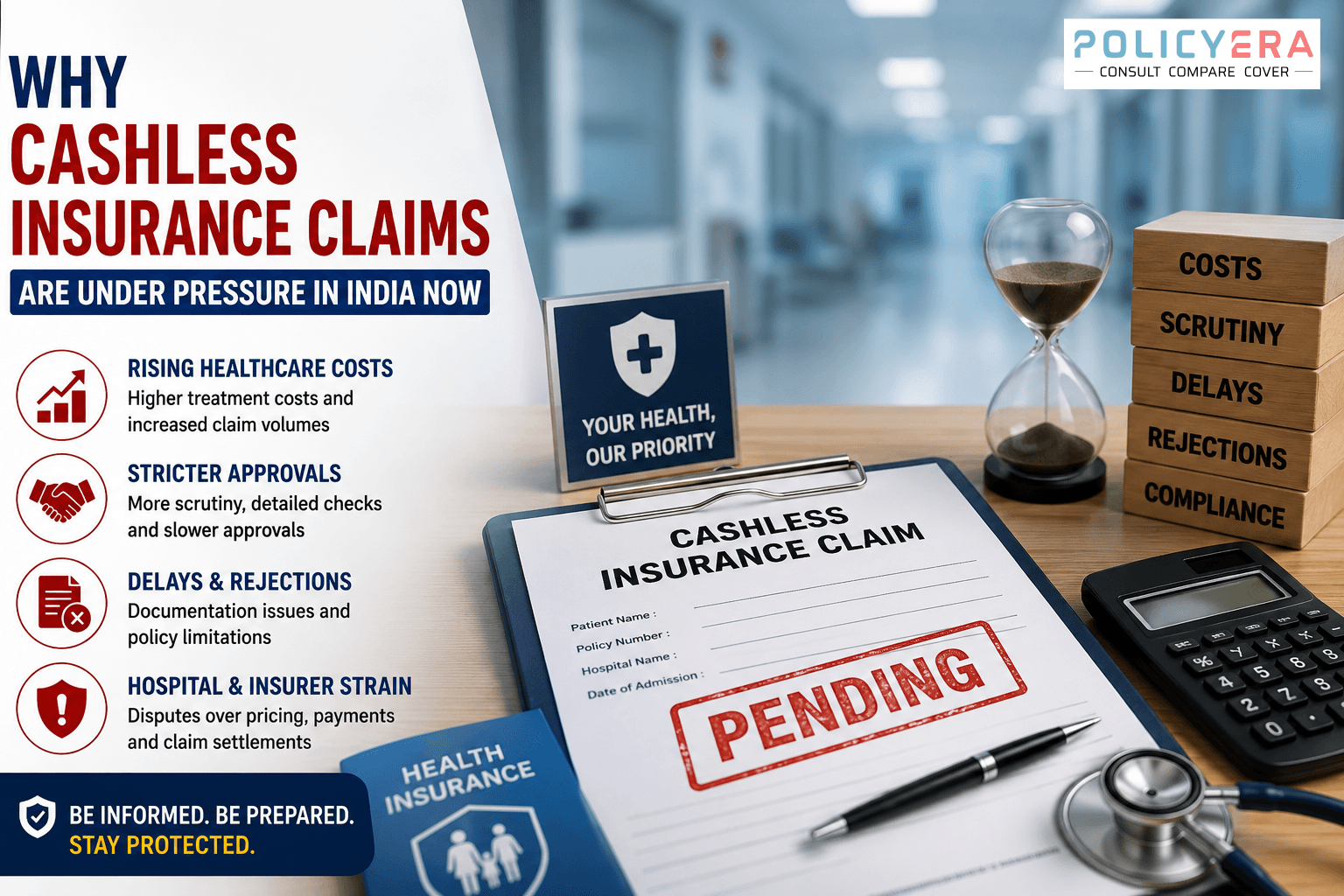
Infographic showing why cashless insurance claims in India face rising healthcare costs, stricter approvals, delays, rejections and hospital-insurer disputes.
Cashless health insurance was introduced to reduce financial stress during medical emergencies by allowing patients to receive treatment without upfront payment. For many policyholders, it represents the most valuable promise of health insurance. Yet across India, cashless claims are increasingly facing delays, partial approvals, and heightened scrutiny. This growing pressure is not driven by a single factor but by a convergence of systemic, financial, and regulatory challenges affecting hospitals, insurers, and patients alike.
Understanding why cashless claims are under strain helps policyholders set realistic expectations and make informed decisions during hospitalisation.
Rising Healthcare Costs and Claim Volumes
One of the primary reasons cashless claims are under pressure is the sharp rise in healthcare costs, combined with higher claim frequency. Post-pandemic healthcare utilisation has increased significantly, with more people seeking hospital-based treatment and elective procedures.
Contributing factors include
• Increased cost of medical equipment, implants, and consumables
• Higher demand for private healthcare facilities
• Rising chronic and lifestyle-related diseases
• Expanded insurance penetration leading to more claims
As claim volumes grow, insurers are forced to tighten authorisation processes to control costs and maintain sustainability.
Hospital Insurer Relationship Strain
The cashless system depends heavily on coordination between hospitals and insurers. Over time, this relationship has become increasingly strained, particularly with private hospitals.
Key friction points include
• Disagreements over package rates and procedure pricing
• Delays in the settlement of hospital dues by insurers
• Hospitals alleging underpayment or arbitrary deductions
• Insurers questioning billing practices and length of stay
In some cases, hospitals have temporarily suspended cashless services for certain insurers, directly impacting patients at the point of care.
Increased Scrutiny to Control Medical Inflation
Medical inflation in India has consistently outpaced general inflation. To manage this, insurers have intensified scrutiny of cashless claims at the pre-authorisation stage.
This has led to
• More detailed medical justifications are being demanded
• Slower approval timelines in non-emergency cases
• Partial approvals with capped amounts
• Increased reliance on standard treatment protocols
While these measures aim to curb unnecessary costs, they often translate into stress and uncertainty for patients and families during treatment.
Policy Design Limitations Exposed
Many cashless claim issues arise not from rejection, but from policy design limitations that policyholders discover too late. Room rent limits, sub-limits, and exclusions play a significant role in reducing approved amounts.
Common challenges include
• Room rent caps triggering proportionate deductions
• Limits on specific procedures or implants
• Non-payable consumables and services
• Waiting period-related denials
When approvals fall short of hospital estimates, policyholders are required to pay the difference, undermining the perceived benefit of cashless treatment.
Administrative and Documentation Burden
Cashless claims involve extensive documentation and coordination. Hospitals must submit detailed reports, treatment plans, and cost estimates, while insurers verify these against policy terms.
Pressure points in this process include
• Incomplete or delayed submission of documents
• Frequent clarification requests from insurers
• Manual intervention in complex cases
• Time sensitivity during emergency admissions
Even minor administrative gaps can delay approvals, creating frustration for patients awaiting treatment confirmation.
Fraud Detection and Risk Management
Insurers are increasingly investing in fraud detection mechanisms to address inflated billing, unnecessary procedures, and repeat claim abuse. While necessary, this has added another layer of scrutiny to cashless claims.
The impact of fraud control measures includes
• Enhanced medical audits before approval
• More conservative assessment of treatment necessity
• Delays in borderline or high-value claims
• Increased documentation requirements
Genuine policyholders may feel the effects of these controls despite having valid claims.
Regulatory and Compliance Pressures
Regulatory expectations around transparency, pricing fairness, and consumer protection have intensified. Insurers are under pressure to justify claim decisions, while hospitals face scrutiny over billing practices.
This evolving regulatory environment has led to
• More cautious claim approvals
• Stricter adherence to policy wording
• Greater emphasis on audit trails and documentation
• Reduced flexibility in exceptional cases
While these measures aim to protect policyholders in the long run, they contribute to short-term friction in cashless claim processing.
Impact on Policyholders
For policyholders, the pressure on cashless claims translates into emotional and financial strain at critical moments. Expectations of seamless treatment often clash with procedural realities.
Common experiences include
• Delays in admission or surgery approvals
• Unexpected out-of-pocket expenses
• Confusion over partial authorisations
• Difficulty navigating insurer hospital communication
These experiences highlight the gap between the concept of cashless insurance and its practical execution.
How Policyholders Can Reduce Cashless Claim Issues
While systemic challenges persist, policyholders can take proactive steps to reduce friction during cashless hospitalisation.
Recommended actions include
• Choosing network hospitals with strong insurer coordination
• Understanding room rent eligibility and opting accordingly
• Informing insurers immediately upon planned admission
• Requesting treatment estimates and approval limits in writing
• Keeping policy documents accessible during emergencies
Preparedness significantly improves the likelihood of smoother claim handling.
The Road Ahead for Cashless Insurance in India
The pressure on cashless claims reflects a healthcare system in transition. Digital integration, standard treatment guidelines, and pricing transparency are gradually improving claim efficiency, but alignment between insurers and hospitals remains critical.
Future improvements are likely to focus on
• Faster digital pre-authorisation systems
• Greater standardisation of procedure costs
• Improved policy communication and clarity
• Stronger grievance redressal mechanisms
Until these systems mature, policyholders must balance expectations with awareness and planning.
Conclusion
Cashless insurance claims in India are under pressure due to rising healthcare costs, increased claim volumes, strained hospital insurer relationships, and tighter cost controls. While the cashless model remains a vital pillar of health insurance, its effectiveness depends on informed policyholders, transparent hospital practices, and sustainable insurer frameworks. Understanding the reasons behind current challenges enables policyholders to navigate the system more confidently and use their coverage as it was intended, as a financial safeguard during times of medical need.
FAQs
1. What is a Cashless Health Insurance Claim and How Does It Work?
A cashless health insurance claim allows you to receive treatment at a network hospital without paying the entire eligible treatment cost upfront. The hospital sends a pre-authorisation request to the insurer or Third-Party Administrator (TPA), which reviews the treatment and coverage under your policy. Once approved, the insurer settles the eligible amount directly with the hospital. You may still need to pay deductibles, non-covered expenses, or costs exceeding the approved amount.
2. How to File a Cashless Insurance Claim at a Hospital?
To file a cashless claim, first visit a hospital that is part of your insurer's network. Inform the hospital insurance desk and provide your policy details and identification documents. The hospital submits the pre-authorisation request along with the required medical records and treatment estimate. The insurer or TPA reviews the request and communicates the approved amount. For planned treatment, it is advisable to initiate the process before hospitalisation. In emergencies, inform the insurer or hospital insurance desk as soon as possible.
3. Why Was My Cashless Health Insurance Claim Rejected?
A cashless claim may be rejected if the treatment is not covered under the policy, the required waiting period has not been completed, the condition falls under an exclusion, or the insurer does not consider the proposed treatment medically necessary under the policy terms. Incomplete documentation or discrepancies in the information provided can also cause problems. A cashless authorisation decision does not necessarily mean that you have no coverage at all, so you should review the reason for rejection and your policy terms.
4. Why Is My Cashless Insurance Claim Getting Delayed?
Cashless claim delays can occur because of incomplete documents, missing medical information, repeated clarification requests, complex treatment, high-value claims, or additional verification by the insurer. Delays can also occur when the hospital and insurer need to resolve differences regarding treatment costs or coverage. To reduce delays, provide accurate documents promptly and stay in contact with the hospital's insurance desk and the insurer or TPA.
5. How Long Can Insurance Companies Legally Delay My Claim in India?
There is no single universal time limit that applies to every stage of every cashless claim. The applicable timelines depend on the type of claim and the prevailing regulations and policy terms. For cashless hospitalisation, insurers are expected to process pre-authorisation and discharge-related requests within the regulatory timelines applicable to health insurance. If there is an unreasonable delay, the policyholder can raise the issue with the insurer's grievance redressal mechanism and, if unresolved, approach the appropriate insurance grievance forum or regulator.
6. My Cashless Claim Was Rejected – What Are My Rights?
If your cashless claim is rejected, you have the right to know the reason for the decision and understand how it relates to your policy terms. You can request the relevant documents or clarification, review the rejection against your policy coverage, and raise a formal grievance with the insurer if you believe the decision is incorrect. If the issue remains unresolved after following the insurer's grievance process, you can explore the applicable external grievance redressal mechanism. A cashless rejection does not automatically mean that every expense is excluded from your policy.