
PolicyEra - Consult Compare Cover

Should I Still Use Insurance Brokers With New Commission Rules?

2026-Oct-15

Policy Era advisor explaining health, life, car and home insurance options to a customer

Consult, compare and choose the right insurance cover for your family with Policy Era.

Are Insurance Brokers Still Worth It?

Buying insurance has become easier than ever. You can compare premiums online, check policy benefits, read customer reviews and purchase a policy without visiting an insurance office. So, when news about the new insurance commission rules in India starts circulating, a reasonable question comes to mind: if commissions change, do insurance brokers still offer enough value to justify using them?

The answer is yes, in many situations—but it depends on the quality of the broker and the complexity of your insurance needs.

An insurance broker can help you compare coverage, understand exclusions, choose suitable add-ons, manage renewals and navigate the claims process. These services can be particularly valuable when you are purchasing family health insurance, term life insurance or commercial insurance for your business.

At the same time, buying insurance directly from an insurer can be a sensible option if you understand the policy and feel comfortable managing it yourself.

India's insurance distribution landscape is also evolving. In October 2026, proposed reforms to insurance commissions and distribution expenses have attracted considerable industry attention. However, proposed commission caps should not automatically be treated as final, implemented rules. Policyholders should distinguish between existing regulations and any proposed changes. The real question is not simply whether brokers receive commissions. It is whether the guidance and ongoing support you receive make your insurance decisions better.

You should still consider using an insurance broker if you need independent comparisons, help understanding policy conditions or assistance during claims and renewals. If your insurance needs are straightforward and you are confident comparing policies yourself, buying directly from an insurer may work just as well.

What Are the New IRDAI Insurance Commission Rules in India?

The Insurance Regulatory and Development Authority of India (IRDAI) regulates India's insurance sector and oversees the conduct of insurers and insurance intermediaries.

To understand the new insurance commission rules in India, it is important to separate the existing regulatory framework from the latest proposals.

What is the current regulatory position?

IRDAI issued its Master Circular on Expenses of Management, including Commission, of Insurers, 2024, dated 15 May 2024. This framework addresses insurers' management expenses, including commission, within the applicable regulatory structure.

You can refer to the official IRDAI circular for the published regulatory document.

In 2026, proposed reforms have brought renewed attention to how commissions are paid to insurance distributors and how distribution costs are controlled. Reported proposals include product-specific commission limits, changes affecting motor insurance distribution and broader limits on insurers' expenses.

However, the precise requirements depend on the final regulatory text, product category, intermediary and applicable implementation date. Do not assume that every reported proposal is already in force.

Why is IRDAI reviewing insurance commissions?

Commission structures can influence how insurance products are sold. If a distributor earns substantially more from one product than another, there may be an incentive to recommend the more rewarding product, even when another option better suits the customer.

Regulatory changes are intended to address concerns around distribution costs, mis-selling and transparency while maintaining access to insurance.

The broader objectives include:

• Encouraging more suitable insurance recommendations.

• Improving transparency around distribution expenses.

• Reducing incentives that may encourage inappropriate sales.

• Supporting responsible insurance distribution.

• Potentially improving affordability if lower costs are passed on to customers.

These are policy objectives, not guarantees that every insurance premium will fall.

What could change under the proposed reforms?
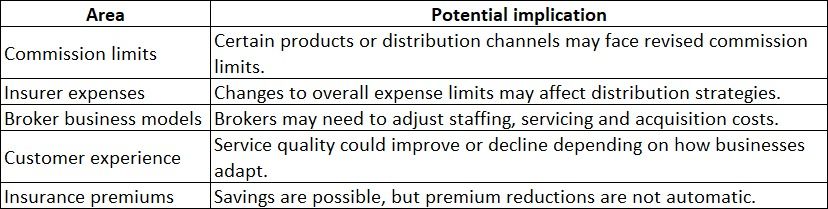
image.png

For consumers, the most useful approach is to monitor official IRDAI notifications rather than making insurance decisions based solely on headlines about proposed reforms.

Should I Still Use an Insurance Broker After the New Commission Rules?

Yes, an insurance broker can still be useful after commission reforms. The important consideration is whether the broker delivers meaningful service rather than simply helping you complete a purchase.

Commission is one part of insurance distribution. It does not, by itself, determine the quality of advice, the suitability of a policy or the support you receive after buying it.

Imagine you are purchasing health insurance for your family. One policy has a lower premium but a restrictive room-rent limit, while another offers broader hospitalisation benefits and fewer limitations. A good broker should explain these differences instead of recommending whichever option is easiest to sell.

The same principle applies to life and motor insurance. The cheapest premium may not provide the coverage you need.

Five reasons to continue using an insurance broker

1. You can compare multiple insurers.

A broker can help you evaluate available policies, benefits, exclusions, deductibles and optional covers instead of relying on one insurer's product range.

2. You get help understanding policy wording.

Insurance documents can be difficult to interpret. A broker can explain important conditions and identify questions you should clarify before purchasing.

3. You can receive renewal assistance.

Your insurance needs may change as your family grows, your business expands or you purchase a new vehicle. A broker can help review whether your existing coverage remains appropriate.

4. You have an additional point of contact during claims.

Depending on the broker's services and the insurer's procedures, the broker can help with documentation, communication and escalation.

5. You can make more informed decisions.

A broker who understands your requirements can explain trade-offs rather than focusing exclusively on price.

The value of these services depends on the individual broker. A broker who disappears after receiving the proposal is unlikely to offer the same benefit as one who provides ongoing support.

Insurance Broker vs Direct Insurance: Which Option Is Better?

Buying insurance directly from an insurer is not necessarily inferior to using a broker. Both approaches can work well when the policyholder understands the coverage and makes an informed decision.

The difference lies mainly in how you access information, compare products and receive support.
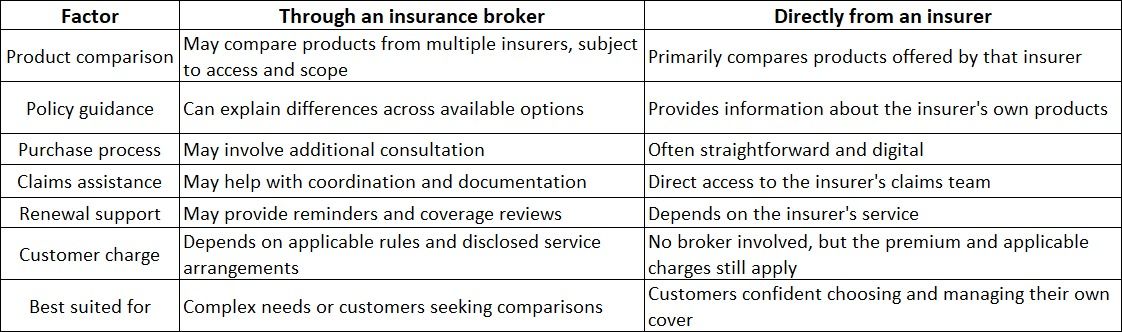
image (2).png

One important distinction: direct purchase does not automatically mean cheaper insurance. Premiums depend on the product, underwriting, coverage, discounts, risk factors and applicable pricing. Compare the final payable premium for equivalent coverage before deciding.

Similarly, a broker's commission is not necessarily a separate bill presented to the customer. Insurance commissions are generally paid by insurers under the applicable regulatory arrangements. Any separate fee charged to a customer must be assessed under the rules applicable to that intermediary and service.

Do Insurance Brokers Charge Customers a Separate Fee in India?

Not necessarily. Many insurance brokers earn remuneration through commissions paid by insurers when policies are sold or renewed, subject to applicable regulations and contractual arrangements.

This does not mean that every broker offers every service free of charge under all circumstances. If a broker proposes a separate consultancy or service fee, ask for a clear explanation of what it covers and whether it is permitted under the applicable rules.

Before agreeing to pay, ask these questions:

• Is the fee separate from the insurance premium?

• What specific service will I receive?

• Is the fee mandatory or optional?

• Will I receive a written invoice or disclosure?

• Does the arrangement comply with the rules applicable to the intermediary?

Do not assume that every broker can charge an additional customer fee simply because commission regulations change. Verify the current requirements and the broker's disclosed terms.

For customers, insurance commission transparency should mean understanding who pays the intermediary, what services are provided and whether any additional charge applies.

Will Insurance Become Cheaper in India After Commission Changes?

Possibly, but it is too early to promise that all policyholders will benefit through lower premiums.

The impact of insurance commission changes on policyholders depends on how insurers and distributors respond to revised costs.

If insurers save money on distribution, some savings could eventually be reflected in pricing. However, insurers also face claims costs, reinsurance expenses, administrative expenses, technology investments, taxes where applicable and other operating costs.

Premiums may also change because of medical inflation, claims experience, vehicle repair costs, underwriting assumptions or changes in the coverage offered.

Consider a simple example.

Suppose two comparable health insurance policies each cost ₹15,000 annually. After a regulatory change, one insurer reduces its premium while another keeps its price unchanged because its claims costs have increased. The customer cannot conclude that the reform has reduced every premium simply by observing the first insurer's price.

To determine whether you are getting a better deal, compare:

• The total annual premium payable.

• The sum insured and available benefits.

• Waiting periods and exclusions.

• Co-payment and deductible requirements.

• Room-rent limits and sub-limits, where applicable.

• The insurer's claims process and service record.

• Renewal terms and the effect of age or claims experience.

A lower premium is useful only when the coverage remains appropriate for your needs.

How Do Commission Reforms Affect the Role of an Insurance Broker?

The proposed IRDAI commission reforms of 2026 could encourage changes in how insurers and intermediaries distribute policies. However, the long-term effect on customers will depend on the final rules and how the market adapts.

A broker's role should extend beyond selling a policy.

1. Understanding the customer's requirements

A broker should begin by asking about your family, existing insurance, financial responsibilities, budget and risk exposure. This helps identify the type and amount of coverage you may need.

2. Comparing coverage rather than just premiums

Insurance coverage comparison should include policy wording, exclusions, limits, deductibles and claim conditions. A comparison that only lists premium amounts may overlook the details that matter most when a claim arises.

3. Explaining important limitations

For example, a health insurance policy may include a waiting period for a pre-existing disease. A motor policy may exclude certain losses or require specific add-ons for particular risks. A broker should explain relevant limitations before you purchase.

4. Providing policy renewal assistance

A useful broker can remind you about renewal deadlines, help you review changes in coverage and explain available alternatives. You should still check policy documents and avoid allowing coverage to lapse.

5. Supporting customers during claims

Insurance broker assistance during claim settlement may include helping organise documents, explaining the insurer's process, tracking communications and identifying the appropriate escalation channel.

The broker does not replace the insurer's claims department and cannot guarantee claim approval. Its practical value is helping you navigate the process and understand your options.

6. Maintaining transparency

A trustworthy broker should explain the basis of its recommendation, disclose relevant remuneration information as required and avoid pressuring you into purchasing unnecessary coverage.

In a changing regulatory environment, the best brokers will be those who can demonstrate consistent service, clear communication and sound product knowledge.

Can an Insurance Broker Help if My Insurance Claim Is Rejected?

Yes. An insurance broker may help you understand the rejection, identify missing information and follow the appropriate grievance process. However, a broker cannot independently overturn an insurer's decision or guarantee payment.

The insurance broker role in claim settlement is particularly important when customers are unsure why a claim was declined.

For example, imagine that your health insurance claim is rejected because the insurer says certain documents are missing. Your broker may help you understand the insurer's request, organise the relevant records and submit a clarification.

If the rejection relates to a policy exclusion, waiting period or disclosure issue, the broker can help you understand the relevant wording and explain the next steps. Whether the claim should be paid depends on the policy terms, facts and applicable law.

What should you do after a claim rejection?

1. Request the written reason. Ask the insurer to explain the grounds for rejection and identify the relevant policy clause.

2. Review your policy documents. Check exclusions, waiting periods, definitions and applicable conditions.

3. Collect supporting evidence. Organise bills, medical records, repair estimates, photographs or other relevant documents.

4. Raise a formal grievance. Submit your complaint to the insurer's designated grievance redressal channel and retain the acknowledgement.

5. Escalate if necessary. If the matter remains unresolved, consider the applicable IRDAI grievance mechanism and the Insurance Ombudsman route, subject to eligibility and procedure.

A broker may assist with several of these steps, but you should keep copies of all communications and monitor applicable deadlines yourself.

For health insurance claim support, ask whether the broker provides help with both cashless and reimbursement claims, what its assistance includes and who will handle your case.

Should I Use an Insurance Broker for Health Insurance, Life Insurance or Motor Insurance?

The right choice depends on the type of policy and your comfort with comparing products.

Health insurance: Often useful

Health insurance can involve waiting periods, room-rent restrictions, co-payments, disease-specific limits, hospital networks and other conditions.

The benefits of buying health insurance through a broker can be significant when you are comparing family floater plans, individual policies, senior-citizen coverage or policies for people with existing medical histories.

Ask the broker to compare coverage details and explain how claims work. Also verify the insurer's current hospital network and policy wording directly.

When direct purchase may work: You already understand the policy, have compared suitable alternatives and are comfortable contacting the insurer yourself.

Life insurance: Useful for complex financial needs

For term life insurance, the most important considerations include the amount of cover, policy duration, premium affordability, exclusions, disclosure obligations and the suitability of optional benefits.

A broker can help compare products from insurers within its available panel and explain differences in policy conditions. You should also disclose your health, occupation, lifestyle and other requested information accurately.

When direct purchase may work: You need a straightforward term policy and can confidently assess the available options.

Motor insurance: Depends on your vehicle and coverage

For a simple motor insurance renewal, buying directly may be convenient. For a new vehicle, an electric vehicle, a high-value car or a policy with several add-ons, a broker may help you understand the differences between available covers.

Compare own-damage protection, third-party liability, deductibles, add-ons and applicable exclusions. Do not select a policy on the assumption that every add-on is necessary.

When direct purchase may work: You understand the difference between third-party and comprehensive cover and have checked the add-ons you actually need.

Business insurance: Broker support can be especially valuable

Businesses may need several types of insurance, including property, liability, marine, cyber, professional indemnity or employee-related covers.

A broker familiar with commercial risks can help identify exposures, compare available terms and coordinate multiple policies. For complex risks, the quality of the broker's technical knowledge and servicing can matter more than the initial premium comparison.

How to Choose an IRDAI-Registered Insurance Broker

The phrase "best insurance broker in India" does not have one universal answer. The right broker for a family buying health insurance may be different from the right broker for a business purchasing professional indemnity insurance.

Use these checks before choosing a broker.

1. Verify registration. Check the intermediary's legal name and current registration details through IRDAI's official resources. Do not rely only on a website logo or verbal assurance.

2. Ask which insurers it can compare. A broker's available product range matters. Request clarity about the insurers and products included in its recommendation.

3. Evaluate its explanation of policy terms. A reliable broker should be able to explain relevant exclusions, waiting periods, limits and deductibles in plain language.

4. Ask about claims assistance. Find out whether support is available after purchase, how claims are tracked and who will be your point of contact.

5. Review its communication and documentation. You should receive clear quotations, accurate proposal information and the relevant policy documents.

6. Understand the remuneration arrangement. Ask how the broker is paid and whether any separate fee applies to the service you are considering.

7. Avoid pressure tactics. Be cautious if a broker promises guaranteed claim approval, discourages you from reading policy documents or insists that one product is unquestionably the best without assessing your needs.

A broker should help you make an informed decision, not make the decision on your behalf.

Is Buying Insurance Directly From an Insurer Better After Commission Reforms?

Buying insurance directly from an insurer can be a good choice when you know what you need and have the time to compare suitable policies.

Direct channels may provide online quotations, product information, policy servicing and claims access without involving a broker. They can also be convenient for renewals and straightforward purchases.

However, you generally need to do more of the comparison yourself if you want to evaluate products from several insurers. Reading policy documents and checking exclusions becomes your responsibility.

Before buying directly, ask yourself:

• Have I compared at least a few suitable policies?

• Do I understand the exclusions and waiting periods?

• Have I checked the total premium and any deductibles?

• Do I know how to contact the insurer during a claim?

• Am I comfortable managing renewals and documentation?

If you can confidently answer yes, direct purchase may be appropriate. If you remain uncertain about coverage or need help comparing multiple options, a broker may be worth considering.

The Future of Insurance Distribution Regulations in India

The future of insurance distribution regulations in India will depend on the final commission framework, implementation timelines and the response of insurers and intermediaries.

The proposed reforms raise several questions: will commission transparency improve, will insurers pass on savings, and how will brokers maintain customer service if their revenue models change?

There are arguments on both sides. Supporters of tighter limits point to distribution costs and the need to reduce incentives that can contribute to mis-selling. Industry representatives have raised concerns about the effect on broker revenues, employment and access to insurance distribution. Recent reporting by Reuters outlines some of these concerns.

For policyholders, the most important outcome should be better insurance decisions, clear disclosures, suitable coverage and effective claims support.

If commission arrangements change, brokers may need to focus more strongly on service quality, digital tools, specialised advice and ongoing customer relationships. Some firms may adapt successfully, while others may reduce the services they offer.

Customers should therefore evaluate the actual service they receive instead of assuming that a regulatory change automatically makes brokers unnecessary.

Conclusion: Choose the Service, Not Just the Sales Channel

The new insurance commission rules in India are an important development for the insurance industry, but they should not be the only factor guiding your purchase decision.

A broker is worth using when it provides meaningful value: better comparisons, clear explanations, suitable recommendations, renewal reminders and assistance during claims. Direct purchase is a practical alternative when you understand your insurance requirements and can manage the process confidently.

The key is to look beyond commission and focus on coverage, transparency, service quality and long-term suitability.

Before you buy or renew a policy, compare the available options, read the important conditions and ask how you will receive help if something goes wrong. A well-chosen insurance policy should protect you when you need it most—and the right distribution channel should help you understand that protection.

FAQs

1. Should I still use an insurance broker after the new commission rules?

Yes, if you need help comparing policies, understanding exclusions, managing renewals or navigating claims. If your needs are straightforward and you can assess policy terms yourself, buying directly from an insurer may be equally suitable.

2. What are the new IRDAI insurance commission rules in India?

IRDAI's existing framework includes its 2024 Master Circular on Expenses of Management, including Commission. Additional commission and distribution reforms were being proposed and debated in 2026. Check the latest official IRDAI notifications to confirm which changes have been finalised and implemented.

3. Do insurance brokers charge customers a separate fee in India?

Many brokers receive remuneration from insurers. Whether a separate customer fee is permitted depends on the applicable rules and the service arrangement. Ask for written disclosure of any additional charge before agreeing to pay.

4. Can an insurance broker help if my insurance claim is rejected?

Yes. A broker may help review the rejection reason, identify relevant policy wording, organise documents and guide you through the insurer's grievance process. It cannot guarantee claim approval or replace the insurer's decision-making process.

5. Should I use an insurance broker for health insurance, life insurance or motor insurance?

A broker can be especially useful for complex health insurance, multiple life insurance comparisons, specialised motor coverage and business insurance. Direct purchase may be convenient when you understand your requirements and the policy conditions.

6. Will insurance become cheaper in India after commission changes?

It is possible, but not guaranteed. Premiums depend on distribution costs, claims experience, underwriting, product benefits and other expenses. Compare equivalent policies rather than assuming every insurer will reduce its prices.

7. How do I find the best insurance broker in India?

Check IRDAI registration, available insurer options, product knowledge, claims support, service standards and remuneration disclosures. The best choice is the broker that meets your particular requirements and provides reliable assistance.

8. Can I change my broker when renewing my insurance?

Options depend on the insurance product, insurer procedures and applicable regulations. Before changing, confirm the required process, documentation and timing with the insurer or relevant intermediary. Do not allow your policy to lapse while making the change.

9. Does a broker guarantee faster health insurance claim settlement?

No. A broker may help with documentation and communication, but claim decisions and processing times depend on the insurer, the claim circumstances, policy conditions and applicable requirements.

10. How can I check whether an insurance broker is registered with IRDAI?

Use IRDAI's official website and relevant intermediary records to verify the broker's legal identity and registration status. If you cannot confirm the details, request clarification before sharing sensitive documents or making a purchase.

BLOG

Latest Blogs

Stay up-to-date with the world of insurance.

Vehicle Insurance

All you need to know about TP and comprehensive insurance

Insurance is essential to financial planning and can protect you and your assets from unexpected events, such as accidents or natural disasters.

Vehicle Insurance

Understanding Car Insurance: Coverage, Terms & Benefits

Choosing the right auto insurance plan can take a lot of time and effort, as there are several car insurance coverage types.

Health Insurance

Reduce Your Tax Liability with Health Insurance: An Overview of Section 80D of the Income Tax Act

Investing in medical coverage is a wise decision that can help protect you from the financial burden of unexpected medical expenses.

Health Insurance

Health Insurance: Essential Coverage for Every Stage of Life

Health insurance is an essential part of a comprehensive financial plan.

Health Insurance

The Importance of Health Insurance for Senior Citizens in India

Health insurance for senior citizens in India is an important consideration, as medical expenses are high in the country.

Vehicle Insurance

Is Driving a Vehicle without Insurance Illegal in India?

You could break the law by not carrying the appropriate insurance while driving on public roads in India. You should know that third-party liability insurance is legally required for everyone who operates a vehicle on public roads in India.

Term life Insurance

Protect Your Family and Save on Taxes: The Advantages of Life Insurance

Life insurance is a financial product that provides financial protection to your loved ones in the event of your untimely demise. In addition, it ensures that your family is financially secure and offers several tax benefits.

Term life Insurance

Don't Leave Your Family's Financial Future to Chance: The Importance of Life Insurance

Life insurance is a financial product that provides financial protection to individuals and their families in the event of the policyholder's death.

Professional Indemnity Insurance

All about Professional Indemnity for Doctors

A legal liability is like an iron trap, a single step in it might lose one’s legs. However, professional indemnity can safeguard you from the iron trap of legal liability.

Professional Indemnity Insurance

Crucial Role of Indemnity Insurance for Doctors

In this unpredictable and huge ocean of healthcare, a doctor controls the helm, balancing the art of healing others with continuous turbulence. Yet, some very skilled captains come in contact with storms that are legal complexities, which can be a reason to compromise with the professional standards and their career.

Professional Indemnity Insurance

All about Hospital Indemnity

Hospital indemnity insurance is insurance designed to cover specific costs incurred during hospitalization. This blog highlights the importance of hospital indemnity insurance for non-doctor healthcare professionals in India.

Professional Indemnity Insurance

Medico-Legal Services by Policy Era

Medico-legal services encompass a range of legal and insurance solutions tailored to protect doctors, hospitals, and other healthcare providers against potential legal and financial liabilities arising from their professional activities.

Professional Indemnity Insurance

All About Medico-Legal Challenges

Medico-legal cases in hospitals refer to incidents where medical and legal aspects overlap. These cases arise when medical professionals encounter situations with potential legal consequences. The main aim of managing MLCs is to balance patient care with legal obligations while minimizing risks to the hospital and healthcare staff.

Professional Indemnity Insurance

Legal Cases Involving Doctors

The rising number of cases against doctors in India is a pressing concern that requires attention from both the medical and legal communities. While patient rights and medical accountability are crucial, it is equally important to protect doctors from undue legal harassment.

Professional Indemnity Insurance

Budget 2025 & Healthcare

The Union Budget 2025 has been a highly anticipated financial blueprint, especially for the healthcare sector, which continues to evolve with rising patient demands, medical advancements, and the push toward universal health coverage. This year’s budget directly impacts doctors, hospitals, and healthcare professionals by shaping policies around infrastructure, accessibility, and affordability of medical services.

Professional Indemnity Insurance

How Doctors Can Prevent Negligence Claims

Medical negligence lawsuits are skyrocketing across the globe, putting doctors and healthcare professionals in an increasingly vulnerable position. With patients becoming more informed about their rights and legal battles playing out online for the world to see the risks have never been higher. A single lawsuit can shatter a doctor’s career, drain finances, and tarnish their hard-earned reputation.

Professional Indemnity Insurance

Doctors Beware: Essential Risk Management Strategies

For doctors, the stakes are high: a single misstep can lead to lawsuits, career setbacks, or even violence from disgruntled patients. In this challenging landscape, merely reacting to problems as they arise is no longer an option. The need of the hour is a proactive risk management strategy that protects doctors, upholds medical ethics, and ensures optimal patient care.

Professional Indemnity Insurance

Strategic Action Plan for Doctors Facing Negligence Allegations

This blog uncovers the essential steps every medical professional must take when facing negligence allegations

Top 7 People Who Were the Only Survivors of Plane Crashes

This blog chronicles the extraordinary real-life stories of individuals who survived plane crashes completely alone, including the recent Air India tragedy.

Professional Indemnity Insurance

Why Medical Indemnity Insurance is Essential!

Medical indemnity insurance, also known as medical malpractice insurance, is a specialized policy that provides coverage to healthcare professionals against legal claims arising from alleged negligence, errors, or omissions in treatment.

Fire & Burglary Insurance

The Ultimate Guide to Fire Insurance for Clinics & Hospitals

Understanding Fire Insurance: Fire insurance for clinics and hospitals is a policy that provides financial protection against losses and damages caused by fire-related incidents.

Vehicle Insurance

Motor Insurance in India, More Than Just a Legal Requirement

This blog explains why motor insurance in India is more than just a legal formality. It highlights how a well-chosen car or two-wheeler policy protects against accidents, theft, and third-party liabilities. With insights on customisation, online convenience, and long-term plans, it guides readers to make smarter insurance choices. A practical read for every responsible vehicle owner.

Critical Illness Insurance

Critical Illness Insurance, Your Financial Backup When Life Takes A Turn

This blog highlights the importance of critical illness insurance as a financial safety net during life-altering health crises. Through real-life inspired examples, it explains how policies offer support for cancer, heart disease, and severe injuries. It outlines the benefits of lump sum payouts, income replacement, and recovery support. A must-read guide for anyone planning long-term financial protection.

Personal Accident Insurance

Accident Insurance, Because Accidents Don’t Come With a Warning

This blog explores why a personal accident insurance policy is essential in today’s unpredictable world. It highlights how the right accident cover provides income during disability, pays for hospitalisation, and supports families after accidental death.

Top 7 Mistakes People Make While Buying Insurance in India (And How Policy Era Helps You Avoid Them)

This blog reveals the top 7 mistakes people often make while buying insurance in India and how Policy Era helps avoid them. From underinsurance to agent-driven decisions, it highlights real issues with practical solutions.

Term life Insurance

Why Life Insurance Is a Must-Have for Every Earning Member

This blog explains why every earning member must secure their family’s future against debt, lifestyle disruption, and uncertainty. It covers types of life insurance and when to buy. With Policy Era’s expert guidance, protection becomes simple, smart, and personal.

Health Insurance

How Health Insurance Protects You from Medical Emergencies and Rising Hospital Bills

This blog explores how health insurance protects individuals and families from rising hospital costs and unexpected medical emergencies. It highlights real treatment expenses in India and explains the value of private medical insurance.

Why Insurance Is the Smartest Way to Prepare for Life’s Unexpected Events

This blog explores why insurance is the smartest way to prepare for unexpected events like illness, accidents, or loss. From life and health to home and travel, each policy plays a critical role in protecting your future. With Policy Era’s expert guidance, staying financially secure becomes simple, personalised, and stress-free.

Term life Insurance

Term Insurance vs. Whole Life Insurance – What’s Best for You?

This blog breaks down the key differences in coverage, premium, and long-term value to help you choose smartly. Whether you want affordable protection or lifelong security with savings, we’ve got you covered. With Policy Era’s personalised advice, finding the right policy becomes easy and stress-free.

Travel Insurance

Travel Insurance, Your Best Friend on International Trips

This blog explains why travel insurance is an essential companion for international trips. It covers how the right policy protects against medical emergencies, baggage loss, and trip cancellations.

Home Insurance

Home Insurance: Protect Your Property from Fire, Theft, and Natural Calamities

This blog explains the rising need for home insurance in India, especially in disaster-prone and urban areas. From policy types to common add-ons, it’s a complete guide to securing your property. With Policy Era’s expert help, protecting your home is simple, affordable, and stress-free.

Term life Insurance

8 Life Events That Mean You Should Consult Policy Era Now

This blog highlights eight major life events that demand immediate review of your insurance and legal plans. From marriage to retirement, each phase brings new risks and responsibilities.

Five Insurance Myths That Are Costing You Money

This blog exposes five common insurance myths that lead to financial mistakes. From believing youth equals immunity to trusting company cover blindly, these misconceptions can cost you heavily.

Women & Insurance: Plans That Fit Different Life Stages

This blog explores insurance strategies tailored for women at every stage of life. From maternity cover for young women to critical illness protection and retirement-focused plans, it highlights why customised coverage is essential.

Health Insurance

Understanding Pre-Existing Diseases in Health Insurance

This blog explains what pre-existing diseases mean in health insurance, why declaring them correctly is essential, and how waiting periods affect coverage.

Term life Insurance

NRI Guide to Buying Term Insurance in India

This blog serves as a comprehensive guide for NRIs looking to buy term insurance in India. It explains eligibility, policies that offer worldwide claim support, and the medical check-up process abroad.

Cashless vs Reimbursement Claims: Which One Is Better?

Cashless and reimbursement claims are two popular ways to settle health insurance bills, but which is better? This guide explains how each process works, its pros and cons, and when to choose one over the other.

Term life Insurance

What Is Human Life Value (HLV) in Insurance and Why It Matters?

This article explains what HLV is, how it is calculated, and why it matters for long-term financial planning. We explore its role in deciding the right sum assured, its link to dependents and liabilities, and the ideal HLV ratio for different life stages.

GST Reforms Explained: What Insurance Buyers Must Know

The 2025 GST reforms have removed GST on individual life and health insurance premiums, making coverage more affordable for millions of Indians. This blog explains the changes, their impact on premiums, and how they affect financial planning. With expert insights and future outlook, it highlights why now is the best time to strengthen your insurance portfolio.

Cyber Insurance

Cyber Insurance for Financial Institutions

Cyber threats are rising fast in the financial sector, making banks and NBFCs prime targets for ransomware, fraud, and data breaches. This blog explains how cyber insurance safeguards institutions against financial, legal, and reputational risks. It covers benefits, compliance aspects, and the role of Policy Era in providing tailored protection.

Insurance in Indian Family Structures: Joint vs Individual Policies

This blog explains the difference between joint family floater insurance policies and individual cover, highlighting pros, cons, and claim examples.

Health Insurance

How to Choose the Right Sum Insured for Your Family’s Health Plan

Choosing the right sum insured is crucial to ensure your family’s health plan truly protects against medical emergencies. This blog explains how to factor in age, medical history, city-specific costs, inflation, and floater vs individual plans.

Health Insurance

What is a Floater Policy & Who Should Choose It?

This blog explains what a floater health insurance policy is, how it works, and who should consider it. It covers advantages like affordability and convenience for nuclear families, along with limitations such as coverage sharing.

Critical Illness Insurance

Why Critical Illness Insurance is a Must in India

Critical illness insurance in India provides financial protection against expensive lifestyle-related diseases such as cancer, heart attack, and kidney failure. Unlike standard mediclaim policies, it offers a lump-sum payout upon diagnosis of 30+ major illnesses.

Personal Accident Insurance

Top 5 Reasons: Why You Need Accidental Insurance Today?

Accidental insurance provides crucial financial protection in the event of sudden injuries, disability, or unforeseen emergencies caused by accidents. It helps cover medical expenses, loss of income, and long-term recovery needs that standard health insurance may not fully support.

Understanding Policy Riders and Endorsements

Understanding policy riders and endorsements is essential for anyone looking to customise their insurance coverage. These add-ons help enhance protection in life, health, and property policies without having to purchase entirely new plans

Health Insurance

Health Insurance Myths Debunked!

This blog clears the confusion surrounding health insurance by breaking down key concepts, addressing common myths, and highlighting why understanding your policy matters.

Term life Insurance

The Benefits of Whole Life Insurance

Health Insurance

When Does Health Insurance Cover Dental Treatment?

Understanding how dental benefits work, what procedures are covered, and the types of plans that offer such support helps individuals make informed healthcare decisions.

Term life Insurance

Top Myths About Buying Online Life Insurance

This blog breaks down the most common myths and reveals why digital buying is safer, simpler, and more affordable.

Vehicle Insurance

Sikkim Hosts a Landmark Supercar Rally in the Heart of the Himalayas

This prestigious supercar rally, featuring high end brands such as Mercedes, Porsche, Lamborghini and BMW, is insured by Policy Era Insurance Broking Firm. The event showcases the scale, luxury and thrill of an ongoing high performance automotive experience set against the Himalayan landscape.

Health Insurance

Factors to Consider When Choosing a Health Insurance

This blog explains the key factors every individual should consider before choosing a policy.

Office Package Policy

Office Package Insurance for Business Assets

Office Package Insurance protects business assets from fire, theft, accidental damage and liability, ensuring continuity and financial stability.

Investment Plans

Gold Rate in India at Record Highs: Buy or Wait?

Gold prices hit record highs in India. Buy or wait? Learn how to balance gold investment with insurance for smarter financial protection.

Baba Vanga’s 2026 Prediction: What Would Humanity’s First Alien Encounter Mean for Insurance and Risk Planning?

Baba Vanga’s 2026 alien prediction sparks a serious question—how prepared is the insurance industry for unprecedented global risks?

Baramati Plane Crash: Ajit Pawar Death Raises Safety Concerns

A tragic plane crash in Baramati claiming the life of Maharashtra Deputy CM Ajit Pawar highlights how suddenly life can change—and why financial and insurance preparedness is essential for every family.

Health Insurance

Choosing the Right Sum Insured in 2026 Using Indian Medical Inflation Data

Understand how Indian medical inflation impacts health insurance in 2026 and learn how to choose the right sum insured to stay financially protected.

Cyber Insurance

Cyber Insurance in India for Small Businesses | PolicyEra

Cyber threats are rising in India. Learn why cyber insurance is vital for small businesses and how PolicyEra helps you choose the right coverage.

Health Insurance

Are Hospitals Inflating Bills? What Insurance Policyholders Need to Know

This blog examines concerns around rising hospital bills and their impact on health insurance policyholders in India. It explains common billing practices, areas of dispute, and how insurers evaluate treatment costs. Readers gain clarity on their rights, responsibilities, and the importance of transparency. The blog helps policyholders make informed decisions during hospitalisation and claims.

Health Insurance

How Claims Portal Reforms Could Lead to Fairer Treatment Costs and Better Insurance Access

This blog examines concerns around rising hospital bills and their impact on health insurance policyholders in India. It explains common billing practices, areas of dispute, and how insurers evaluate treatment costs. Readers gain clarity on their rights, responsibilities, and the importance of transparency. The blog helps policyholders make informed decisions during hospitalisation and claims.

Health Insurance

Why Buying Insurance Through a Broker Is Safer

Discover why buying insurance through a broker like Policy Era is safer than online. Get expert advice, better coverage & claim support.

Investment Plans

One Advisor for All Insurance Policies | Policy Era

Learn why buying all insurance policies from one advisor saves money, avoids coverage gaps, and simplifies claims. Get expert help with PolicyEra.com

Health Insurance

Right Sum Insured in 2026 | Indian Medical Inflation Guide

Learn how to choose the right health insurance sum insured in 2026 using Indian medical inflation trends, healthcare costs, and coverage needs.

Health Insurance

2026 Health Insurance Changes for Senior Citizens India

Explore 2026 health insurance changes for senior citizens in India, including renewability, waiting periods, premiums, claims and coverage.

Health Insurance

How Right Insurance Makes a Difference in Financial Life

Discover how the right insurance provides financial stability, claim readiness, and long-term protection for families, professionals, and businesses.

Shop Owner Insurance

Medical Shop Insurance for Stock Fire Theft Cover

Protect your medical shop from fire theft stock loss and disasters Compare insurance plans with PolicyEra and choose the right cover.

Investment Plans

Investment Plan Insurance vs Mutual Funds in India

Compare investment plan insurance vs mutual funds in India. Learn key differences, benefits, and choose the right wealth creation option with PolicyEra.

Health Insurance

Why Cheap Insurance Costs More Later | PolicyEra

Cheap insurance may save money today but cost lakhs later. Learn the hidden risks, coverage gaps, and choose smarter insurance with PolicyEra.

Health Insurance

Why Cheap Insurance Costs More Later | Policy Era

Cheap insurance may save money today but cost lakhs later. Learn the hidden risks and choose better coverage with Policy Era.

Shop Owner Insurance

Medical Shop Insurance for Pharmacy Owners | PolicyEra

Protect your pharmacy with medical shop insurance. Compare plans, get expert advice, and hassle-free claim support with Policy Era.

Health Insurance

Rising Healthcare Costs in India | Insurance Planning

Healthcare costs in India are rising. Learn why smart insurance planning protects your savings and ensures long-term financial security.

Super Top up

Super Top Up Health Insurance Made Clear

Facing bills that climb quicker than paychecks - that’s life now across India. Hospital stays often hit five to ten lakhs, sometimes way beyond, particularly in big-city clinics. Sure, holding an insurance plan helps, yet gaps remain when numbers soar too high. Here enters the idea of a Super Top-Up health plan. Let’s break it down in simple, non-technical language.

Super Top up

Super Top Up Insurance Lowers Growing Healthcare Expenses in India

Investment Plans

Tax Planning with Investment Insurance and Section 80C

Health Insurance

What Increased Investment in Medical Infrastructure Means for Patients and Insurers in Uttar Pradesh

Uttar Pradesh is witnessing significant investment in medical infrastructure across public and private sectors. This blog analyses how improved facilities affect patient access, treatment quality, and insurance utilisation. It also explains the implications for insurers managing higher volumes and costs. Readers gain insight into how infrastructure growth reshapes healthcare economics.

Health Insurance

What Type of Insurance Coverage Do Indians Prefer Now?

This blog examines current insurance preferences among Indian consumers and how protection priorities are evolving. It highlights growing demand for life, health, and comprehensive coverage driven by rising financial and medical risks. The piece explains key trends shaping consumer behaviour and coverage choices. It also underscores the importance of informed advisory support in translating preference into effective protection.

Health Insurance

What’s Your Biggest Financial Fear?

This blog examines the most common financial fears faced by individuals and families in 2026, from income loss to rising medical costs and inflation. It explains how life insurance and health insurance address these risks in a structured and practical way. The article highlights the dangers of relying on a single financial product and the importance of balanced planning. It underscores how informed insurance decisions build long term financial confidence and security.

Health Insurance

Why Cashless Insurance Claims Are Under Pressure in India Now

Cashless health insurance claims are facing increasing scrutiny due to rising costs and regulatory changes. This blog explores the reasons behind delays, rejections, and stricter approvals. It explains how hospital practices, insurer controls, and claim ratios influence the cashless system. Readers learn how to navigate claims more effectively in the current environment.

Health Insurance

Why Insurance Claims Get Rejected in India and What You Can Do

Learn why insurance claims get rejected in India and discover practical tips to avoid claim denials through accurate disclosures, timely filing, proper documentation, and the right coverage.

Health Insurance

Why Insurance Matters in 2026 Trends, Insights, and What It Means for You

This blog explains why insurance has become a core pillar of financial security in 2026 amid rising health, economic, and lifestyle risks. It explores key insurance trends and sector growth while highlighting the importance of informed planning for families and businesses. The piece aligns insurance decisions with long-term life goals rather than short-term cost considerations. It also reflects how advisory-driven platforms like Policy Era help individuals make transparent, compliant, and well-informed insurance choices.

Investment Plans

Young Professionals Building Wealth with Investment Insurance

Health Insurance

Your Insurance Questions Answered Top Queries in 2026

This blog answers the most common insurance questions people are asking in 2026 as risks and coverage needs continue to evolve. It explains how much insurance is enough, whether corporate cover is sufficient, and what policies suit professionals and freelancers. The article clarifies term insurance, riders, and claim-related concerns with practical insight. It helps readers make informed insurance decisions with confidence and clarity.

Cyber Insurance

Cyber Insurance for Small Businesses in India: Financial Protection from Ransomware & Data Theft

Director & Officer's Liability Insurance

Directors and Officers Insurance for Startups: Coverage, Cost, and When Indian Startups Need It

Health Insurance

Health Insurance Claim Settlement Ratio (CSR): Top Insurers Compared

Term life Insurance

How to Choose the Best Life Insurance Policy for Family

Health Insurance

Is It Covered? Health Insurance Coverage in India: Robotic Surgery, Non-Medical Expenses & Mental Health

Is Policy Era a Legitimate Insurance Platform? An Honest and Uncensored Analysis Before You Purchase

Investment Plans

Investment Insurance: Secure Your Future Today

IRDAI Distribution Reforms 2026: What Do They Mean for Insurance Buyers?

Vehicle Insurance

Motor & EV Insurance in India: Zero Depreciation, EV Battery Cover & NCB Transfer Guide

Should I Still Use Insurance Brokers With New Commission Rules?