Health Insurance
What Increased Investment in Medical Infrastructure Means for Patients and Insurers in Uttar Pradesh
Uttar Pradesh is witnessing significant investment in medical infrastructure across public and private sectors. This blog analyses how improved facilities affect patient access, treatment quality, and insurance utilisation. It also explains the implications for insurers managing higher volumes and costs. Readers gain insight into how infrastructure growth reshapes healthcare economics.
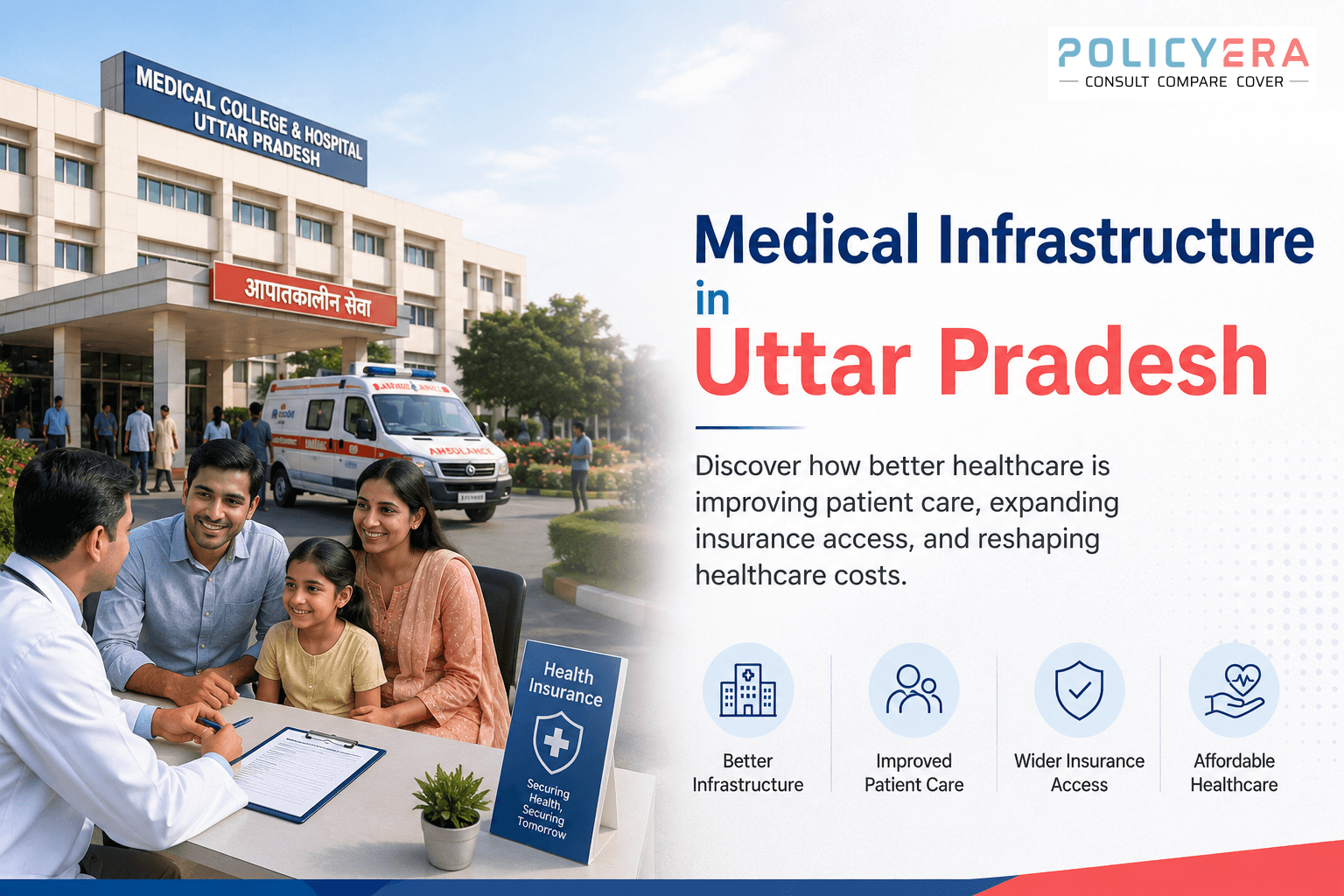
A modern hospital in Uttar Pradesh with a doctor consulting an Indian family, highlighting improved healthcare facilities, patient care, and health insurance access.
Uttar Pradesh has witnessed a significant surge in public and private investment in medical infrastructure over the past few years. New medical colleges, upgraded district hospitals, expanded diagnostic facilities, and improved emergency care networks are reshaping the healthcare landscape of the state. These developments are not only transforming patient access to care but are also redefining how health insurance functions in one of India’s most populous regions. For patients, better infrastructure promises improved outcomes and reduced travel burdens. For insurers, it introduces both opportunities and challenges that require recalibration of pricing, coverage, and claims management within the state.
Expansion of Healthcare Facilities Across the State
Large scale investments have focused on strengthening healthcare beyond major cities, bringing advanced facilities closer to semi urban and rural populations.
Key developments include
• Establishment of new government medical colleges and teaching hospitals
• Upgradation of district hospitals into multi speciality centres
• Increased availability of ICU beds and trauma care units
• Expansion of diagnostic laboratories and imaging centres
This decentralisation of healthcare reduces dependence on metropolitan hospitals and improves timely access to treatment.
Improved Access and Affordability for Patients
For patients, infrastructure growth directly influences accessibility and cost dynamics. When quality healthcare is available closer to home, indirect expenses reduce significantly.
Patients benefit through
• Lower travel and accommodation costs for treatment
• Faster diagnosis and early intervention
• Reduced waiting times at overcrowded tertiary hospitals
• Greater choice between public and private healthcare providers
This shift improves healthcare equity, especially for lower and middle income families across Uttar Pradesh.
Rise in Advanced and Specialised Treatments
With better infrastructure comes the availability of advanced medical procedures that were earlier limited to metro cities.
Notable changes include
• Increased cardiac, oncology, and orthopaedic procedures
• Availability of advanced surgical technologies
• Improved maternal and neonatal care services
• Enhanced emergency response and trauma management
While this improves clinical outcomes, it also raises treatment costs, influencing insurance claim sizes and policy design.
Impact on Health Insurance Utilisation
As healthcare access improves, insurance utilisation tends to increase. Patients who previously avoided hospitalisation due to distance or capacity constraints are now more likely to seek insured care.
This results in
• Higher claim frequency due to increased awareness and access
• Greater use of cashless hospital networks
• Increased demand for comprehensive coverage rather than basic plans
• More scrutiny of hospital billing practices
Insurers must adapt to this rise in utilisation while maintaining claim sustainability.
Changing Cost Structures for Insurers
Infrastructure upgrades often involve modern equipment, skilled specialists, and higher operational costs, which reflect in hospital billing.
For insurers, this means
• Higher average claim amounts for advanced procedures
• Need to reassess sum insured adequacy for Uttar Pradesh policies
• Revision of premium pricing models based on regional risk
• Closer monitoring of treatment protocols and cost efficiency
Balancing affordability with rising medical costs becomes a central challenge.
Strengthening of Hospital Networks and Cashless Care
Improved infrastructure expands the pool of hospitals eligible for insurer empanelment. This strengthens cashless care availability across the state.
Key implications include
• Wider hospital networks for policyholders
• Reduced dependence on reimbursement based claims
• Faster pre authorisation and claim settlement in upgraded facilities
• Better standardisation of documentation and processes
For patients, this translates into smoother hospital experiences and reduced financial stress during treatment.
Greater Regulatory and Claims Oversight
As healthcare infrastructure grows, regulatory oversight also intensifies to ensure quality and cost control.
This leads to
• Increased audits of hospital billing and treatment necessity
• Closer collaboration between insurers and healthcare providers
• Emphasis on standard treatment guidelines
• Reduced tolerance for inflated or non essential charges
Such oversight aims to protect both patients and insurers from unfair practices.
Opportunities for Preventive and Primary Care Focus
Infrastructure investment is not limited to curative care alone. There is a growing emphasis on preventive and primary healthcare.
This creates scope for
• Expanded health check up programmes
• Early detection of chronic illnesses
• Reduced long term treatment costs
• Better risk management for insurers
Preventive care benefits patients through improved quality of life and insurers through controlled claim ratios.
What Patients in Uttar Pradesh Should Be Mindful Of
While improved infrastructure is a positive development, patients must make informed insurance choices to fully benefit from it.
Important considerations include
• Ensuring adequate sum insured to match rising treatment costs
• Checking hospital network coverage in their district
• Understanding sub limits and room rent clauses
• Reviewing policy exclusions related to advanced procedures
Awareness ensures that better infrastructure translates into real financial protection.
What This Means for the Future of Healthcare and Insurance in Uttar Pradesh
The intersection of growing medical infrastructure and expanding insurance coverage signals a structural shift in Uttar Pradesh’s healthcare ecosystem.
Looking ahead
• Patients can expect improved access and quality of care
• Insurers will design more region specific products
• Hospital insurance partnerships will deepen
• Focus will increase on transparency, efficiency, and sustainability
This evolving landscape has the potential to create a more balanced and resilient healthcare system across the state.
Conclusion
Increased investment in medical infrastructure is reshaping healthcare delivery in Uttar Pradesh, offering tangible benefits to patients while redefining the role of insurers. Improved access, advanced treatments, and stronger hospital networks enhance patient outcomes but also introduce higher costs and utilisation for insurers. Navigating this transition requires informed policy selection by patients and adaptive strategies by insurers. When aligned effectively, infrastructure growth and insurance coverage together can create a more accessible, affordable, and sustainable healthcare ecosystem for Uttar Pradesh.
FAQs
1. How to Find Quality Healthcare in Uttar Pradesh: A Patient's Guide
Finding quality healthcare in Uttar Pradesh starts with choosing hospitals that have qualified specialists, modern diagnostic facilities, emergency services, and good patient reviews. If you have health insurance, check whether the hospital is part of your insurer's cashless network. Comparing treatment facilities, infection control standards, and follow-up care can also help you make an informed decision.
2. What Should I Know Before Visiting a Government Hospital in UP?
Government hospitals in Uttar Pradesh provide affordable healthcare and are often equipped to handle complex medical cases. Before visiting, carry valid identity proof, previous medical records, and any applicable health scheme or insurance documents. Depending on the hospital and department, waiting times may vary, so arriving early can help.
3. How Much Does Treatment Cost at Private vs Government Hospitals in UP?
Treatment at government hospitals is generally more affordable due to government support, while private hospitals may charge higher fees for faster services, advanced technology, and additional amenities. The final cost depends on the hospital, treatment required, and whether you are covered by a health insurance policy or government healthcare scheme.
4. How to Find Quality Government Hospitals Near Me in Uttar Pradesh
To find reliable government hospitals in Uttar Pradesh, check your district health department's hospital list or use trusted online hospital directories. Look for facilities that offer the required specialty, emergency care, diagnostic services, and have experienced medical professionals. Reading recent patient reviews can also help assess the quality of care.
5. What Health Schemes Can Help Me Afford Treatment in Uttar Pradesh?
Eligible residents can benefit from government healthcare initiatives that reduce or cover hospitalization costs at empanelled hospitals. In addition to these schemes, having a comprehensive health insurance policy can provide wider coverage, access to private hospitals, and financial protection against high medical expenses.
6. Which Cities in Uttar Pradesh Have the Best Hospital Infrastructure?
Major cities such as Lucknow, Noida, Ghaziabad, Kanpur, Agra, and Varanasi have some of the state's most developed healthcare infrastructure. These cities offer multispecialty hospitals, advanced diagnostic centres, medical colleges, and specialized treatment facilities, making them preferred destinations for both routine and complex medical care.